Who Is Responsible for Nonprofit Compliance?


Key Takeaways
The board of directors holds ultimate legal and fiduciary responsibility for nonprofit compliance, including reviewing the Form 990 and adopting required governance policies.
The executive director manages day-to-day compliance, including filing coordination, record keeping, and reporting issues to the board.
Compliance is a shared responsibility. Staff, finance teams, and committee members all play supporting roles depending on their function.
Nonprofits must meet both federal (IRS) and state requirements, which vary by location and can include annual filings, charitable solicitation registrations, and more.
Building clear ownership of compliance tasks and maintaining good records year-round is the most effective way to stay in good standing and avoid penalties.
Nonprofit compliance isn't one person's job. From the board of directors to the executive director to staff members, every role carries specific responsibilities. This guide breaks down who is responsible for what, so your organization stays in good standing with the IRS, your state, and the communities you serve.
Who Is Responsible for Nonprofit Compliance?
Running a nonprofit comes with real legal responsibilities. Whether you're just getting started or you've been operating for a few years, understanding who handles compliance and what that actually means is one of the most important things you can do for your organization.
The short answer is that compliance is a shared responsibility. It's not just the board's job, and it's not just the executive director's job. It belongs to everyone in a leadership role. But that also doesn't mean everyone does everything. Different people are responsible for different things, and knowing those distinctions helps your nonprofit stay organized, accountable, and protected.
If you haven't yet mapped out your management and compliance obligations from start to finish, the Nonprofit Compliance Checklist: What Every Founder Needs to Know is a strong place to start. This blog focuses specifically on the people behind those obligations and what each role is expected to do.
What Nonprofit Compliance Actually Includes
Before diving into who is responsible, it helps to know what compliance covers. For most nonprofits, staying compliant means:
- Filing federal tax returns with the IRS (typically Form 990)
- Meeting your state's registration and reporting requirements
- Following employment laws if you have paid staff or volunteers
- Maintaining accurate financial records and meeting audit requirements
- Adopting and following required organizational policies
- Holding regular board meetings and keeping meeting minutes
- Renewing licenses, registrations, and solicitation permits as needed
This is not a one-time checklist. Compliance is ongoing, and different deadlines hit at different points throughout the year. Understanding which role manages which obligation is the foundation of a healthy nonprofit.
The Board of Directors: Fiduciary and Legal Responsibility
The board of directors carries the highest level of legal responsibility for nonprofit compliance. Under IRS guidance on governance practices for tax-exempt organizations, the board is ultimately accountable for ensuring the organization operates within the law and in alignment with its stated mission.
Board members are not passive. They have three core fiduciary duties that carry legal weight:
Duty of Care means each board member must act in good faith, make informed decisions, and exercise reasonable judgment. This includes reviewing financial reports, asking questions, and staying engaged with what the organization is doing.
Duty of Loyalty means board members must put the organization's interests first. Personal benefit or conflicts of interest must be disclosed and avoided.
Duty of Obedience means the board must ensure the nonprofit stays true to its mission and complies with all applicable laws, including federal and state regulations.
In practical terms, the board is responsible for:
- Approving the annual budget and overseeing financial management
- Reviewing and approving the IRS Form 990 before it's filed
- Adopting conflict of interest policies and other required governance documents
- Ensuring proper oversight of the executive director
- Making sure the organization is registered in every state where it fundraises
Board members can be held personally liable in some circumstances, especially if they knowingly allow illegal activity, approve excessive compensation, or fail to exercise basic oversight. This is not meant to be alarming. Most board members who act in good faith and stay informed are well protected. But it is a reason to take these responsibilities seriously. Board oversight also extends beyond compliance. Our guide on nonprofit management basics explains how boards govern, delegate, and keep nonprofit organizations running sustainably.
The Executive Director: Day-to-Day Compliance Management
While the board sets direction and holds ultimate accountability, the executive director (or ED) manages compliance in practice. This is the person on the ground making sure that policies are followed, deadlines are met, and the right records are kept.
The executive director's compliance responsibilities typically include:
- Managing staff and volunteers in accordance with employment law
- Overseeing financial operations and working with an accountant or bookkeeper
- Preparing or coordinating the filing of required reports and returns
- Maintaining the organization's records, contracts, and governing documents
- Reporting compliance issues to the board in a timely way
- Implementing policies the board has approved
The executive director is the operational hub. If a state filing is due, the ED is usually the one making sure it gets done. If a policy needs to be updated, the ED typically drafts it for board approval. If a compliance issue surfaces, the ED is responsible for flagging it and working toward a resolution.
Is the executive director legally liable for compliance failures? In some cases, yes. If an executive director acts outside their authority, mismanages funds, or deliberately misrepresents information to the IRS, they can face personal consequences. But again, this typically applies to willful misconduct, not honest mistakes made in good faith.
Staff and Committee Members: Supporting Roles That Matter
Beyond the board and the executive director, other people in your organization also play a role in keeping things compliant.
Finance staff or a treasurer are often responsible for bookkeeping, tracking expenses, and preparing financial statements used in annual filings. A compliance officer, if your organization has one, may be dedicated to monitoring regulatory requirements and internal policies. For larger nonprofits, this is a formal role. For smaller ones, it's often absorbed into another position.
Program staff may be responsible for tracking grant-funded expenses and ensuring that restricted funds are spent appropriately. Development staff who handle fundraising should understand charitable solicitation laws in the states where the nonprofit operates.
The point is that compliance isn't siloed. When everyone who touches financial, legal, or operational matters understands their piece of it, the whole organization runs more smoothly.
Who Files Taxes and Required Reports?
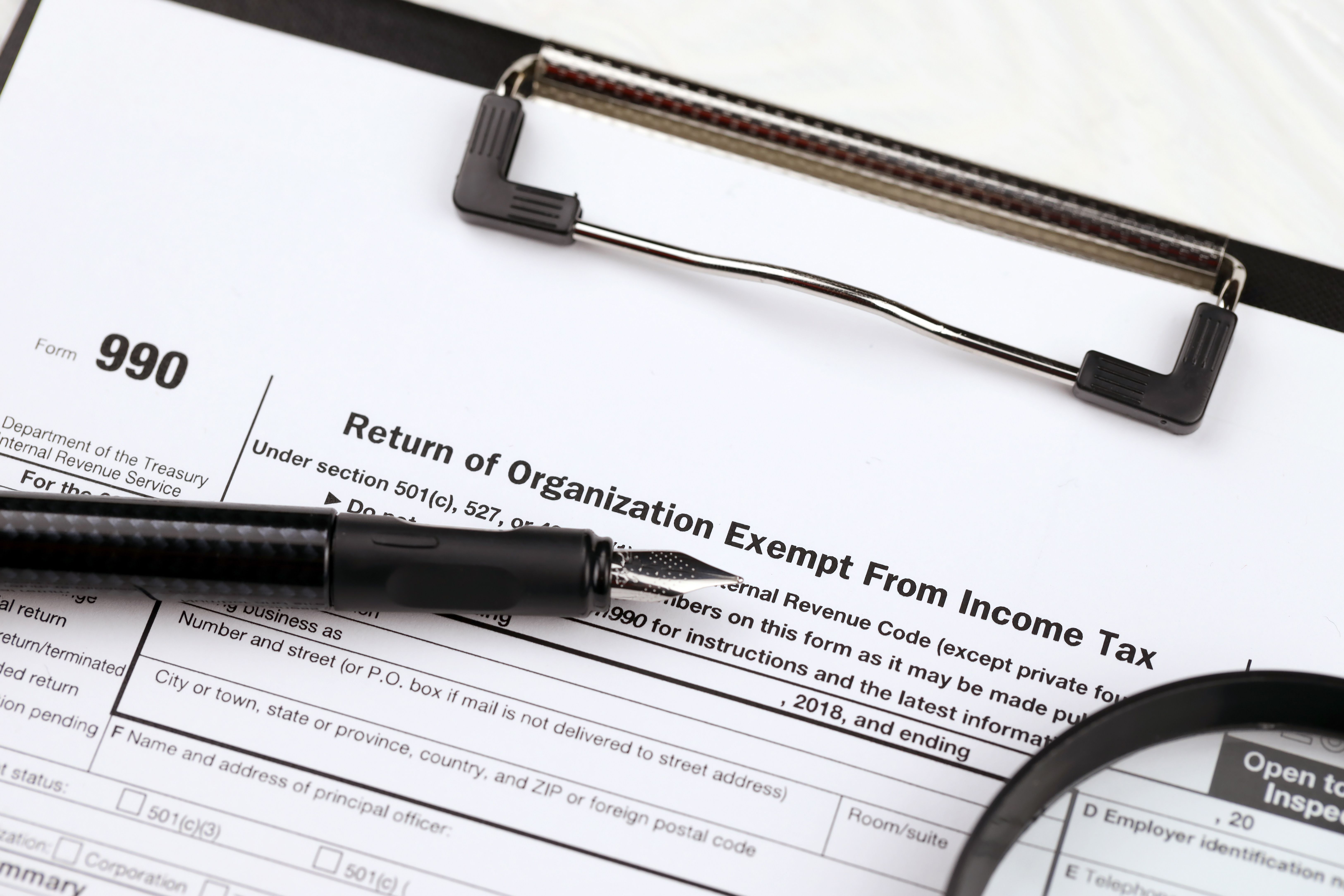
For most nonprofits, federal tax compliance centers on the annual IRS Form 990. The specific form your organization uses depends on your size:
- Form 990-N (e-Postcard): For nonprofits with gross receipts under $50,000
- Form 990-EZ: For those with gross receipts under $200,000 and total assets under $500,000
- Form 990: For larger organizations above those thresholds
You can read more about which version applies to you in Understanding IRS Form 990 Filing Requirements.
The executive director typically coordinates the preparation of the Form 990, often working with an accountant or financial professional. The board reviews and approves it before it's submitted. Once filed, the Form 990 becomes a public document, meaning anyone can review your organization's financials and governance practices.
In addition to the federal return, most states require their own annual filings. These may include a state nonprofit report, a charitable solicitation registration renewal, or both. Requirements vary by state, so it's worth confirming what applies to your organization each year.
What Happens If a Nonprofit Falls Out of Compliance?
Missing a deadline or failing to file required documents can have real consequences. The IRS can revoke a nonprofit's tax-exempt status if it fails to file required returns for three consecutive years. State agencies can administratively dissolve an organization that doesn't meet its reporting requirements.
The good news is that most compliance issues can be corrected. The IRS has reinstatement processes, and states often allow organizations to get back into good standing by catching up on filings and paying any fees. But it's much easier to stay current than to fix problems after the fact.
For a full breakdown of what can happen and how to respond, What Happens if a Nonprofit Misses a Filing Deadline? walks through the scenarios in detail.
Required Policies and Record Keeping
Compliance isn't only about filing documents. It also includes having the right policies in place and keeping accurate records over time.
The IRS specifically asks about certain policies on the Form 990, including a conflict of interest policy, a whistleblower policy, and a document retention policy. While having these policies is not technically required for tax-exempt status, the absence of them raises flags during audits and raises questions about your organization's governance.
Nonprofit organizations are generally required to keep financial records, meeting minutes, governing documents, and tax filings for several years. The exact retention requirements vary depending on the type of document, but a good rule of thumb is to keep most records for at least seven years.
If you haven't established these policies yet, How to Create Required Policies for Your Nonprofit Organization offers a practical walkthrough for getting them in place.
How to Stay on Top of Compliance Year-Round
Staying compliant isn't about doing everything at once. It's about building habits and systems that keep your organization on track throughout the year.
A few practices that help:
- Set calendar reminders for every compliance deadline, including federal and state filings, registration renewals, and board meeting requirements
- Assign clear ownership for each compliance task so nothing falls through the cracks
- Review your compliance obligations at the start of each year and after any major organizational changes
- Keep a centralized location for all governing documents, policies, and filings
For a detailed look at how to manage this on an ongoing basis, How to Keep Your Nonprofit in Good Standing Year-Round covers the full picture.
If your organization is in its first year of operation, Your First Year as a Nonprofit: Key Deadlines and Filings is a helpful guide to the specific obligations that come with getting started.
Building Compliance Into Your Culture
The nonprofits that stay in good standing year after year don't treat compliance as a burden. They treat it as part of how they operate. When the board understands its fiduciary role, when the executive director manages deadlines and records proactively, and when staff know their part in the process, compliance becomes a natural rhythm rather than a last-minute scramble.
It starts with knowing who is responsible for what. It grows into a culture where accountability is shared and leadership is informed.
If your organization is still in the formation stage, How to Form a Nonprofit Organization in 8 Steps gives you the full roadmap for getting set up correctly from the beginning, including the governance structures that make compliance manageable over time.
Beacon Nonprofit is here to support you at every stage, from formation through ongoing compliance. When you're ready to take the next step, we're ready to help.
Frequently Asked Questions
Related Articles

How to Keep Your Nonprofit in Good Standing Year-Round
Keeping your nonprofit in good standing requires consistent attention throughout the year. Learn which filings matter most, how often they are due, and where to find official guidance to stay compliant with confidence.

Your First Year as a Nonprofit: Key Deadlines and Filings
Your nonprofit’s first year sets the foundation for long-term success. Learn the key deadlines and filings most nonprofits face in their first year and how to stay organized from day one.

How to Form a Nonprofit Organization in 8 Steps
Forming a nonprofit organization is one of the most meaningful steps you can take for your mission, and it's more manageable than it might seem.
Nonprofit Compliance Checklist: What Every Founder Needs to Know

Nonprofit Management 101: Building a Strong and Sustainable Organization
Learn nonprofit management basics, including board governance, financial oversight, volunteer coordination, and compliance responsibilities that support long-term sustainability.
How to Create Required Policies for Your Nonprofit Organization
Nonprofit policies provide structure, support compliance, and help organizations operate responsibly. Understanding how to create them can strengthen long-term success.

What Happens if a Nonprofit Misses a Filing Deadline?
Missing a filing deadline can feel stressful, especially for new nonprofit leaders. This guide explains what typically happens when a nonprofit misses a filing deadline, how issues are often resolved, and how organizations can move forward with clarity and confidence.
Understanding IRS Form 990 Filing Requirements: 990-N, 990-EZ, and 990 Explained
Nonprofits recognized as tax-exempt organizations typically submit an annual information return to the IRS. Understanding which Form 990 version to file and when to file it helps organizations stay compliant and focused on their mission.

Nonprofit Conflict of Interest Policy: What It Is and Why Your Organization Needs One
A conflict of interest policy protects your nonprofit's credibility and is expected by the IRS when you apply for 501(c)(3) status. Learn what the policy requires, what it should include, and how to put one in place the right way.
Get Nonprofit Tips and Compliance Guidance
Subscribe for updates, insights, and resources that help you stay compliant and grow your mission.