Beacon’s Resource Center
Trusted nonprofit insights and plain-language guides to help you launch confidently, maintain compliance, and create meaningful impact.
How to Start a Nonprofit Sports Team or Youth Sports Organization

Starting a nonprofit sports team or youth sports organization means more than picking a name and scheduling practices. This guide walks first-time founders through every step, from choosing a structure to filing for 501(c)(3) status, so you can build a program that lasts.

How to Create a Nonprofit Fundraising Plan
A nonprofit fundraising plan is the roadmap your organization needs to raise money consistently and grow with confidence. This guide walks first-time founders through setting goals, choosing fundraising methods, building a calendar, and tracking results.

How to Create a Nonprofit Business Plan
A nonprofit business plan gives your organization direction before you file a single form. This guide walks first-time founders through every section, from your mission to your financials, so you can move forward with clarity.

How to Apply for 501(c)(3) Tax-Exempt Status

Applying for 501(c)(3) tax-exempt status allows nonprofit organizations to receive tax-deductible donations and operate as federally recognized charities. This guide explains the steps required to apply, including forming a nonprofit corporation, obtaining an EIN, preparing governance documents, and submitting IRS Form 1023 or Form 1023-EZ.
How to Start a Nonprofit Sports Team or Youth Sports Organization
Emely Lancheros
October 27, 2026
Starting a nonprofit sports team or youth sports organization means more than picking a name and scheduling practices. This guide walks first-time founders through every step, from choosing a structure to filing for 501(c)(3) status, so you can build a program that lasts.
How to Create a Nonprofit Fundraising Plan
Emely Lancheros
October 27, 2026
A nonprofit fundraising plan is the roadmap your organization needs to raise money consistently and grow with confidence. This guide walks first-time founders through setting goals, choosing fundraising methods, building a calendar, and tracking results.
How to Create a Nonprofit Business Plan
Emely Lancheros
October 27, 2026
A nonprofit business plan gives your organization direction before you file a single form. This guide walks first-time founders through every section, from your mission to your financials, so you can move forward with clarity.
How to Apply for 501(c)(3) Tax-Exempt Status
Ginger Petrus
October 27, 2026
Applying for 501(c)(3) tax-exempt status allows nonprofit organizations to receive tax-deductible donations and operate as federally recognized charities. This guide explains the steps required to apply, including forming a nonprofit corporation, obtaining an EIN, preparing governance documents, and submitting IRS Form 1023 or Form 1023-EZ.
Virginia Nonprofit Bylaws: What to Include and Why They Matter

Beacon Nonprofit Staff
October 27, 2026
Your articles of incorporation register your nonprofit. Your bylaws are what keep it running without falling apart six months later. Here is exactly what Virginia law expects, what the IRS wants to see, and how to write bylaws that protect your board instead of confusing it.
501(c)(3) Application Help: What Professional Filing Support Includes
Ginger Petrus
October 26, 2026
Applying for 501(c)(3) status is one of the most important steps in starting a nonprofit, and it's also one of the most detailed. Professional filing support can help you prepare a complete, accurate application so your organization can move forward with confidence.

How to Start a Scholarship Fund: Nonprofit and Sponsored Options
Emely Lancheros
October 26, 2026
Starting a scholarship fund is more achievable than most people think. Whether you want to form your own nonprofit or partner with an established organization, there are clear paths to funding students in your community.

Can Nonprofits Have Employees and Volunteers? What Founders Need to Know
Emely Lancheros
October 26, 2026
Yes, nonprofits can have both paid employees and volunteers. Understanding how each type of worker is classified, compensated, and protected matters for your organization's compliance, finances, and culture.

How to Start a Homeless Shelter Nonprofit
Emely Lancheros
October 26, 2026
Starting a homeless shelter nonprofit means turning a deep commitment to your community into a recognized, funded organization. This guide walks first-time founders through every step, from defining your mission to filing for 501(c)(3) tax-exempt status.

Are Donations to Nonprofits Tax-Deductible?
Emely Lancheros
October 26, 2026
Not all donations to nonprofits are automatically tax-deductible. Learn which organizations qualify, what donors need to claim a deduction, and what nonprofit founders should know to support their donors confidently.

Nonprofit Conflict of Interest Policy: What It Is and Why Your Organization Needs One
Ginger Petrus
October 26, 2026
A conflict of interest policy protects your nonprofit's credibility and is expected by the IRS when you apply for 501(c)(3) status. Learn what the policy requires, what it should include, and how to put one in place the right way.

How to Start a Booster Club: Formation and Compliance Basics
Emely Lancheros
October 26, 2026
A booster club is one of the most impactful ways to support students and school programs. This guide walks first-time founders through the key steps, from incorporation and bylaws to 501(c)(3) status and ongoing compliance.
Florida Nonprofit EIN: Application Steps for New Organizations
Beacon Nonprofit Staff
October 22, 2026
Getting an EIN takes about 15 minutes, but only if your Florida incorporation is finished and your details match the state record. Here are the exact steps, what to have ready, and what to do the moment you receive your number.

How to Get 501(c)(3) Status for a Florida Nonprofit
Beacon Nonprofit Staff
October 22, 2026
Getting 501(c)(3) status in Florida means clearing two separate hurdles: state incorporation and federal IRS approval. Here is the exact sequence, the Florida-specific rules, and what each stage costs.

Florida Nonprofit Name Search: How to Check Name Availability
Beacon Nonprofit Staff
October 22, 2026
Picking the wrong name can cost you weeks of delay and a rejected filing. Here is exactly how Florida nonprofits confirm a name is truly free to use.

How to File Nonprofit Articles of Incorporation in Florida
Beacon Nonprofit Staff
October 22, 2026
Filing your Articles of Incorporation is the legal birth certificate of your Florida nonprofit. Get the name, purpose, and dissolution clause wrong, and you could face rejection or IRS delays down the road.

Florida Nonprofit Startup Costs: Filing Fees & Other Expenses
Beacon Nonprofit Staff
October 22, 2026
Starting a nonprofit in Florida involves more moving pieces than most founders expect, but knowing all the fees up front is what separates a smooth launch from a budget-busting surprise.

Charitable Solicitation in Florida: When Does Registration Apply
Beacon Nonprofit Staff
October 22, 2026
Florida requires most charities to register with the state before soliciting a single donation, and the rule applies to your donors, not your headquarters. Here is who must register, who is exempt, and what it costs.

What Insurance Does a Nonprofit Need? A Plain-Language Guide for New Organizations
Ginger Petrus
October 20, 2026
Most nonprofits need several types of insurance to protect their organization, board members, staff, and volunteers. This plain-language guide explains the four main coverage types every new nonprofit founder should understand before they open their doors.

How to Find Grants for a Nonprofit
Emely Lancheros
October 20, 2026
Grants are one of the most sought-after funding sources for nonprofits, but finding the right ones takes strategy. This guide walks first-time founders through where to search for grants, how to evaluate whether a grant is a good fit, and how to build a pipeline of real opportunities for your organization.

How to Build Community Support Before Starting a Nonprofit
Emely Lancheros
October 20, 2026
Building community support before you launch your nonprofit is one of the most important steps you can take. Learn how to engage your community, find early champions, and establish credibility with funders before you file a single form.

How to Start a Nonprofit Organization with No Money
Ginger Petrus
October 20, 2026
Starting a nonprofit with little to no money is more achievable than most people think. This guide walks first-time founders through the practical steps, free resources, and early funding strategies that make it possible to launch a mission-driven organization on a tight budget.

How Long Does It Take to Get 501(c)(3) Status?
Ginger Petrus
October 16, 2026
Waiting on your 501(c)(3) decision can feel like the hardest part of starting a nonprofit. Here’s what the IRS says about typical processing times, what can slow things down, and what you can do while you wait.

Nonprofit Board Member Fiduciary Duties Explained
Emely Lancheros
October 16, 2026
Fiduciary duties define what nonprofit board members are legally and ethically required to do. This guide explains the three core duties (care, loyalty, and obedience) in plain language, with practical examples to help first-time founders build a board that leads with integrity.

Nonprofit Incorporation Checklist: What You Need Before You File
Ginger Petrus
October 16, 2026
Use this nonprofit incorporation checklist to understand what information you need before filing your Articles of Incorporation and how to avoid common filing mistakes.

How to Write Articles of Incorporation for a Nonprofit (With Example)
Ginger Petrus
October 16, 2026
Articles of incorporation are the legal foundation of your nonprofit. This guide walks you through exactly what to include, what the IRS and your state require, and provides a real example so you can file with confidence.
How to Start a Food Bank Nonprofit
Emely Lancheros
October 16, 2026
Starting a food bank nonprofit means forming a legal organization, applying for 501(c)(3) tax-exempt status, and meeting local food safety requirements. This guide walks you through each step.

How to Write Nonprofit Bylaws: What to Include
Ginger Petrus
October 16, 2026
Learn how to write nonprofit bylaws, what to include, and how they support governance, compliance, and 501(c)(3) readiness.

How to Start a Church: Formation, Governance, and Tax-Exempt Status
Emely Lancheros
October 15, 2026
Learn how to start a church, establish leadership and governance, understand state incorporation requirements, and navigate federal 501(c)(3) tax-exempt status.

How to Form a Nonprofit Organization in 8 Steps
Ginger Petrus
October 15, 2026
Learn how to start a nonprofit organization in eight steps, from state incorporation and board setup to applying for 501(c)(3) tax-exempt status.
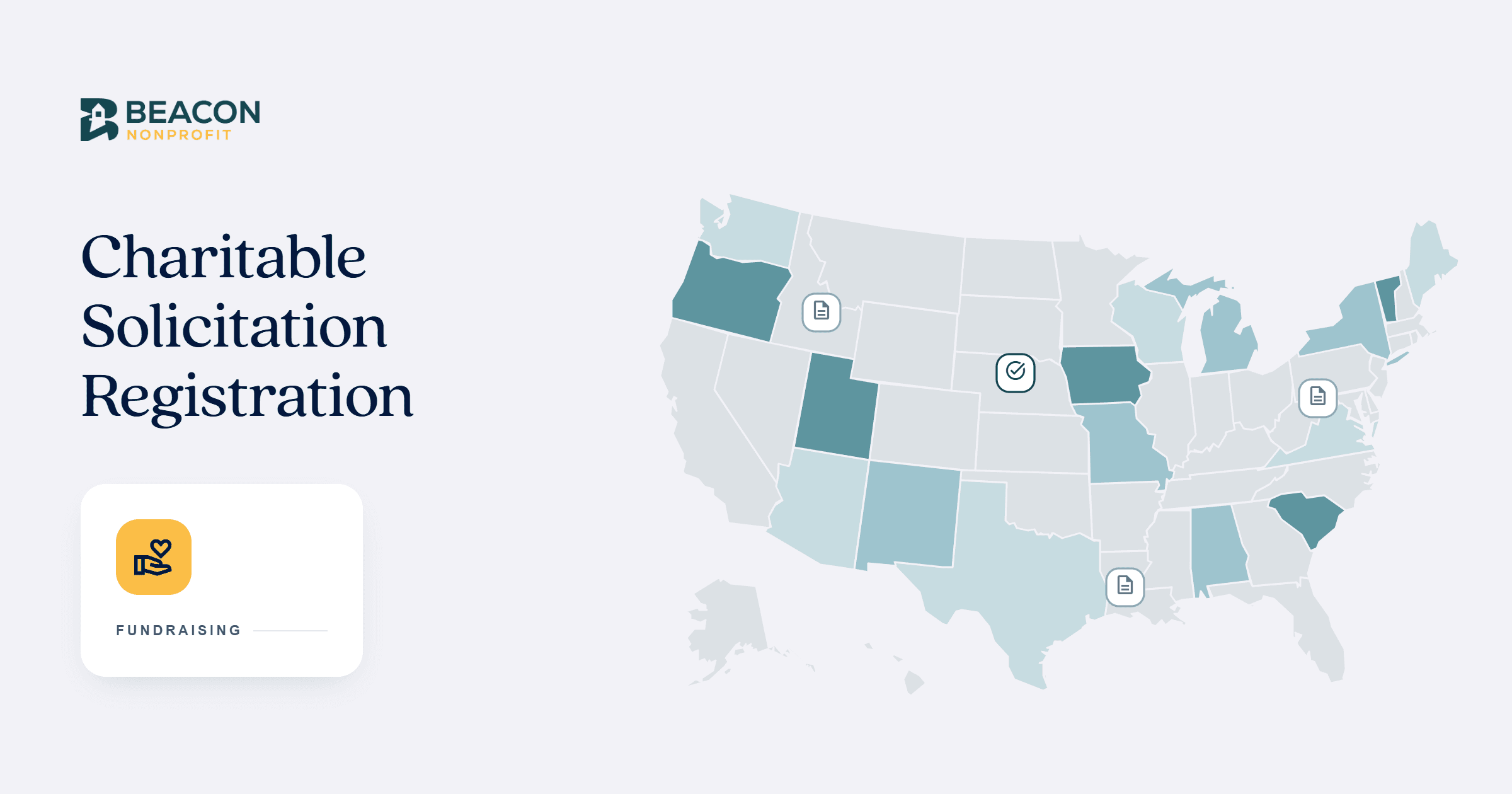
Charitable Solicitation Registration: What Nonprofits Need to Know
Ginger Petrus
October 15, 2026
Learn what charitable solicitation registration is, when your nonprofit may need to register, and how state fundraising requirements fit into nonprofit compliance.

How to Create Required Policies for Your Nonprofit Organization
Ginger Petrus
October 15, 2026
Nonprofit policies provide structure, support compliance, and help organizations operate responsibly. Understanding how to create them can strengthen long-term success.
Understanding IRS Form 990 Filing Requirements: 990-N, 990-EZ, and 990 Explained
Ginger Petrus
October 15, 2026
Nonprofits recognized as tax-exempt organizations typically submit an annual information return to the IRS. Understanding which Form 990 version to file and when to file it helps organizations stay compliant and focused on their mission.

How to Apply for an EIN for a Nonprofit Organization
Ginger Petrus
October 15, 2026
An EIN is a federal tax ID number your nonprofit needs to open a bank account, hire employees, and apply for 501(c)(3) status. This guide walks you through exactly how to apply for an EIN for your nonprofit, step by step.

Nonprofit Legal Services: When Do You Need an Attorney?
Emely Lancheros
October 15, 2026
Not every nonprofit needs an attorney to get started. Learn what nonprofit legal services cover, when to seek legal advice, and where to find affordable support.

How to Look Up a Nonprofit's Tax-Exempt Status
Emely Lancheros
October 15, 2026
Wondering if a nonprofit is really tax-exempt? Learn how to look up any organization's IRS tax-exempt status, understand what the results mean, and keep your own nonprofit in good standing.
Beacon Nonprofit Resources Made Simple
Plain-language guides to help you form your nonprofit, understand structures, and stay compliant.
How to Start a Nonprofit Sports Team or Youth Sports Organization
Starting a nonprofit sports team or youth sports organization means more than picking a name and scheduling practices. This guide walks first-time founders through every step, from choosing a structure to filing for 501(c)(3) status, so you can build a program that lasts.
How to Create a Nonprofit Fundraising Plan
A nonprofit fundraising plan is the roadmap your organization needs to raise money consistently and grow with confidence. This guide walks first-time founders through setting goals, choosing fundraising methods, building a calendar, and tracking results.
How to Create a Nonprofit Business Plan
A nonprofit business plan gives your organization direction before you file a single form. This guide walks first-time founders through every section, from your mission to your financials, so you can move forward with clarity.
How to Apply for 501(c)(3) Tax-Exempt Status
Applying for 501(c)(3) tax-exempt status allows nonprofit organizations to receive tax-deductible donations and operate as federally recognized charities. This guide explains the steps required to apply, including forming a nonprofit corporation, obtaining an EIN, preparing governance documents, and submitting IRS Form 1023 or Form 1023-EZ.
Virginia Nonprofit Bylaws: What to Include and Why They Matter
Your articles of incorporation register your nonprofit. Your bylaws are what keep it running without falling apart six months later. Here is exactly what Virginia law expects, what the IRS wants to see, and how to write bylaws that protect your board instead of confusing it.
501(c)(3) Application Help: What Professional Filing Support Includes
Applying for 501(c)(3) status is one of the most important steps in starting a nonprofit, and it's also one of the most detailed. Professional filing support can help you prepare a complete, accurate application so your organization can move forward with confidence.
How to Start a Scholarship Fund: Nonprofit and Sponsored Options
Starting a scholarship fund is more achievable than most people think. Whether you want to form your own nonprofit or partner with an established organization, there are clear paths to funding students in your community.
Can Nonprofits Have Employees and Volunteers? What Founders Need to Know
Yes, nonprofits can have both paid employees and volunteers. Understanding how each type of worker is classified, compensated, and protected matters for your organization's compliance, finances, and culture.
How to Start a Homeless Shelter Nonprofit
Starting a homeless shelter nonprofit means turning a deep commitment to your community into a recognized, funded organization. This guide walks first-time founders through every step, from defining your mission to filing for 501(c)(3) tax-exempt status.
Are Donations to Nonprofits Tax-Deductible?
Not all donations to nonprofits are automatically tax-deductible. Learn which organizations qualify, what donors need to claim a deduction, and what nonprofit founders should know to support their donors confidently.
Nonprofit Conflict of Interest Policy: What It Is and Why Your Organization Needs One
A conflict of interest policy protects your nonprofit's credibility and is expected by the IRS when you apply for 501(c)(3) status. Learn what the policy requires, what it should include, and how to put one in place the right way.
How to Start a Booster Club: Formation and Compliance Basics
A booster club is one of the most impactful ways to support students and school programs. This guide walks first-time founders through the key steps, from incorporation and bylaws to 501(c)(3) status and ongoing compliance.
Florida Nonprofit EIN: Application Steps for New Organizations
Getting an EIN takes about 15 minutes, but only if your Florida incorporation is finished and your details match the state record. Here are the exact steps, what to have ready, and what to do the moment you receive your number.
How to Get 501(c)(3) Status for a Florida Nonprofit
Getting 501(c)(3) status in Florida means clearing two separate hurdles: state incorporation and federal IRS approval. Here is the exact sequence, the Florida-specific rules, and what each stage costs.
Florida Nonprofit Name Search: How to Check Name Availability
Picking the wrong name can cost you weeks of delay and a rejected filing. Here is exactly how Florida nonprofits confirm a name is truly free to use.
How to File Nonprofit Articles of Incorporation in Florida
Filing your Articles of Incorporation is the legal birth certificate of your Florida nonprofit. Get the name, purpose, and dissolution clause wrong, and you could face rejection or IRS delays down the road.
Florida Nonprofit Startup Costs: Filing Fees & Other Expenses
Starting a nonprofit in Florida involves more moving pieces than most founders expect, but knowing all the fees up front is what separates a smooth launch from a budget-busting surprise.
Charitable Solicitation in Florida: When Does Registration Apply
Florida requires most charities to register with the state before soliciting a single donation, and the rule applies to your donors, not your headquarters. Here is who must register, who is exempt, and what it costs.
What Insurance Does a Nonprofit Need? A Plain-Language Guide for New Organizations
Most nonprofits need several types of insurance to protect their organization, board members, staff, and volunteers. This plain-language guide explains the four main coverage types every new nonprofit founder should understand before they open their doors.
How to Find Grants for a Nonprofit
Grants are one of the most sought-after funding sources for nonprofits, but finding the right ones takes strategy. This guide walks first-time founders through where to search for grants, how to evaluate whether a grant is a good fit, and how to build a pipeline of real opportunities for your organization.
How to Build Community Support Before Starting a Nonprofit
Building community support before you launch your nonprofit is one of the most important steps you can take. Learn how to engage your community, find early champions, and establish credibility with funders before you file a single form.
How to Start a Nonprofit Organization with No Money
Starting a nonprofit with little to no money is more achievable than most people think. This guide walks first-time founders through the practical steps, free resources, and early funding strategies that make it possible to launch a mission-driven organization on a tight budget.
How Long Does It Take to Get 501(c)(3) Status?
Waiting on your 501(c)(3) decision can feel like the hardest part of starting a nonprofit. Here’s what the IRS says about typical processing times, what can slow things down, and what you can do while you wait.
Nonprofit Board Member Fiduciary Duties Explained
Fiduciary duties define what nonprofit board members are legally and ethically required to do. This guide explains the three core duties (care, loyalty, and obedience) in plain language, with practical examples to help first-time founders build a board that leads with integrity.
Nonprofit Incorporation Checklist: What You Need Before You File
Use this nonprofit incorporation checklist to understand what information you need before filing your Articles of Incorporation and how to avoid common filing mistakes.
How to Write Articles of Incorporation for a Nonprofit (With Example)
Articles of incorporation are the legal foundation of your nonprofit. This guide walks you through exactly what to include, what the IRS and your state require, and provides a real example so you can file with confidence.
How to Start a Food Bank Nonprofit
Starting a food bank nonprofit means forming a legal organization, applying for 501(c)(3) tax-exempt status, and meeting local food safety requirements. This guide walks you through each step.
How to Write Nonprofit Bylaws: What to Include
Learn how to write nonprofit bylaws, what to include, and how they support governance, compliance, and 501(c)(3) readiness.
How to Start a Church: Formation, Governance, and Tax-Exempt Status
Learn how to start a church, establish leadership and governance, understand state incorporation requirements, and navigate federal 501(c)(3) tax-exempt status.
How to Form a Nonprofit Organization in 8 Steps
Learn how to start a nonprofit organization in eight steps, from state incorporation and board setup to applying for 501(c)(3) tax-exempt status.
Charitable Solicitation Registration: What Nonprofits Need to Know
Learn what charitable solicitation registration is, when your nonprofit may need to register, and how state fundraising requirements fit into nonprofit compliance.
How to Create Required Policies for Your Nonprofit Organization
Nonprofit policies provide structure, support compliance, and help organizations operate responsibly. Understanding how to create them can strengthen long-term success.
Understanding IRS Form 990 Filing Requirements: 990-N, 990-EZ, and 990 Explained
Nonprofits recognized as tax-exempt organizations typically submit an annual information return to the IRS. Understanding which Form 990 version to file and when to file it helps organizations stay compliant and focused on their mission.
How to Apply for an EIN for a Nonprofit Organization
An EIN is a federal tax ID number your nonprofit needs to open a bank account, hire employees, and apply for 501(c)(3) status. This guide walks you through exactly how to apply for an EIN for your nonprofit, step by step.
Nonprofit Legal Services: When Do You Need an Attorney?
Not every nonprofit needs an attorney to get started. Learn what nonprofit legal services cover, when to seek legal advice, and where to find affordable support.
How to Look Up a Nonprofit's Tax-Exempt Status
Wondering if a nonprofit is really tax-exempt? Learn how to look up any organization's IRS tax-exempt status, understand what the results mean, and keep your own nonprofit in good standing.

What is a 501(c)(3)? A Plain-Language Guide for First-Time Founders
A 501(c)(3) is the IRS designation that gives charitable nonprofits tax-exempt status and makes donations to them tax-deductible. This guide breaks down what it means, who qualifies, and what to expect as a first-time founder.

Nonprofit Filing Deadlines Every Founder Should Know
Nonprofit founders have a lot to keep track of, and filing deadlines are among the most important. This guide breaks down the key dates, forms, and rules you need to know to keep your organization in good standing with the IRS and your state.

How to File Form 990-N With Beacon Nonprofit
Learn how to file Form 990-N with Beacon Nonprofit, who qualifies, what information you'll need, and how to meet your annual IRS filing requirement.

Form 1023 vs. Form 1023-EZ: What's the Difference?
If you're applying for 501(c)(3) tax-exempt status, the IRS gives you two options: Form 1023 and Form 1023-EZ. Understanding the difference between them, and which one your organization qualifies to use, can save you time, money, and stress.

How to Name Your Nonprofit (Rules, Examples, and Tips)
Learn how to name your nonprofit, check availability, follow state requirements, and choose a name that reflects your mission and supports long-term growth.

How to Open a Bank Account for a Nonprofit
Opening a bank account is one of the first financial steps every nonprofit needs to take. This guide walks you through what documents you need, how to choose the right bank, and what to expect during the process, so you can start managing your organization's money the right way.

How to Start a Private Foundation
Starting a private foundation gives you a structured, tax-exempt way to direct charitable giving toward the causes you care about most. This guide walks first-time founders through every step, from incorporating at the state level to applying for 501(c)(3) status with the IRS.

Are You Ready to Start a Nonprofit? Take Our Formation Readiness Quiz

Thinking about forming a nonprofit organization? Before you file anything, take our free self-assessment quiz to find out if you're truly ready and what steps to take next. Score your readiness across five key areas and get a personalized action plan.

Nonprofit Formation Services: What to Look For
Not all nonprofit formation services are created equal. This guide breaks down what to look for when choosing a service to help you incorporate your nonprofit and pursue 501(c)(3) tax-exempt status, so you can move forward with confidence.
Nonprofit Executive Compensation: What the IRS Expects
If you're leading a nonprofit or plan to hire someone to run it, understanding what the IRS expects around executive compensation is one of the most important compliance steps you'll take. This guide breaks down how reasonable compensation is defined, how the board sets pay the right way, and what gets reported on Form 990.

Can a Nonprofit Founder Be Paid?
Nonprofit founders may receive compensation for services that support their organization’s mission. To remain compliant, pay must be reasonable, properly approved, and aligned with federal tax-exempt rules.

Why Nonprofits Lose Tax-Exempt Status
Tax-exempt status is one of the most valuable things a nonprofit can have, but it can be revoked if your organization isn't careful about compliance. This guide explains the most common reasons nonprofits lose their 501(c)(3) status, what warning signs to watch for, and what to do if it happens to your organization.

What Happens if a Nonprofit Misses a Filing Deadline?
Missing a filing deadline can feel stressful, especially for new nonprofit leaders. This guide explains what typically happens when a nonprofit misses a filing deadline, how issues are often resolved, and how organizations can move forward with clarity and confidence.

Nonprofit Board of Directors Requirements: What States and the IRS Expect
Every nonprofit needs a board of directors, but requirements vary by state and the IRS has expectations of its own. This guide explains the minimum number of directors, who can serve, what officer roles are typically required, and how your board structure connects to 501(c)(3) eligibility.

Nonprofit Board Meeting Requirements: What Every Founder Needs to Know
Nonprofit board meetings are more than a formality. They're a legal and governance requirement for your organization. This guide explains what meetings your board must hold, what needs to be documented, and how to stay compliant with state and federal expectations.
Nonprofit Compliance Checklist: What Every Founder Needs to Know
Stay organized with this nonprofit compliance checklist covering annual IRS filings, state requirements, board responsibilities, recordkeeping, and key deadlines.

Can One Person Start a Nonprofit Organization?
Can one person start a nonprofit organization? Yes. But forming and maintaining a nonprofit organization usually requires a board of directors. Here’s what founders need to know about state requirements, IRS rules, and practical next steps.

When Your Nonprofit Must File 990-N, 990-EZ, or 990
Not every nonprofit files the same tax return, and knowing which Form 990 your organization is required to submit can save you from costly mistakes. This guide breaks down the differences between 990-N, 990-EZ, and the full Form 990, so you always know where your nonprofit stands.

What Happens If a Nonprofit Doesn't File Its Annual Report?
Missing an annual report deadline can put your nonprofit's good standing and even its tax-exempt status at risk. Here's what actually happens when a nonprofit doesn't file, and how to get back on track.

IRS Nonprofit Search: How to Find and Verify a Nonprofit
The IRS Tax Exempt Organization Search tool lets anyone look up a nonprofit's tax-exempt status, eligibility to receive tax-deductible donations, and key filings. Learn how to use it, what it shows, and what to do if your nonprofit isn't listed.

How to Start an Animal Rescue Nonprofit
Starting an animal rescue nonprofit takes more than a love of animals. This guide walks you through every step, from choosing a legal structure to applying for 501(c)(3) status, so you can build a rescue that's sustainable, credible, and ready to help more animals.

501(c)(3) Requirements: What You Need to Qualify
Understanding the IRS requirements for 501(c)(3) is the first step toward building a tax-exempt nonprofit. This guide walks first-time founders through every key 501(c)(3) qualification—from your organization's purpose to its structure and ongoing obligations, so you can move your mission forward with confidence.

What Happens After You Receive 501(c)(3) Status
Receiving 501(c)(3) status is a major milestone for any nonprofit. This guide explains what typically happens after approval, including next steps, ongoing responsibilities, and how nonprofits can move forward with clarity and confidence.

Nonprofit Bylaws vs. Articles of Incorporation: What Is the Difference?
When you start a nonprofit, you'll need to create two foundational documents: your Articles of Incorporation and your bylaws. This guide explains what each one is, when you create it, what it contains, and how the two work together to establish your organization.

How to Get an EIN for a Virginia Nonprofit
Getting your EIN is a quick step, but doing it out of order can delay your entire nonprofit launch. Here's exactly how Virginia founders get it right the first time.
How to Get Tax-Exempt Status for a Virginia Nonprofit
Learn the exact steps, forms, and fees to get your Virginia nonprofit federally and state tax-exempt. Includes SCC, IRS, and Virginia tax requirements.

Virginia Nonprofit Articles of Incorporation: Requirements & Filing Guide
Filing your Articles of Incorporation is the legal starting point for any Virginia nonprofit. This guide breaks down exactly what the state requires, what the IRS expects, and how to file the first time correctly.

Virginia Nonprofit Board Requirements: Directors, Officers & Governance
A board is not a formality on your articles of incorporation. It is the legal structure that decides everything else your nonprofit does.

How Much Does It Cost to Start a Nonprofit in Virginia
Starting a nonprofit in Virginia involves more moving pieces than most founders expect, but knowing all the fees up front is what separates a smooth launch from a budget-busting surprise.

Virginia Nonprofit Filing Requirements: What You Need to Know
Starting a nonprofit in Virginia is only step one. Staying compliant with the state and IRS each year is what keeps your tax-exempt status alive and your mission running.

Virginia Nonprofit Annual Reports: Filing Requirements & Deadlines
Miss this filing, and Virginia can shut your nonprofit down without a hearing. Here is exactly when it is due, what it costs, and how to keep your organization in good standing every single year.

Nonprofit Recordkeeping Requirements Explained
Keeping good records is one of the most important responsibilities a nonprofit has. This guide explains what nonprofit recordkeeping requirements apply to your organization, which documents to keep, how long to keep them, and how to build a system that protects your tax-exempt status for the long term.

Nonprofit Bylaws Template (With Example)
Nonprofit bylaws are your organization's rulebook. This guide explains what to include in your bylaws, offers a practical template, and helps you get it right the first time.

Do Nonprofits Need a Registered Agent? Requirements Explained
A registered agent serves as an official point of contact for a nonprofit corporation. Learn when nonprofits need a registered agent, who can serve, address requirements, costs, and what to consider when choosing one.

How to Set Nonprofit Executive Compensation: What Founders and Boards Need to Know
Setting nonprofit executive compensation isn't just a budget decision. It's a governance responsibility with real IRS implications. This guide walks founders and boards through what "reasonable compensation" means, how to set pay the right way, and how executive salaries are reported on Form 990.

How Nonprofits Get Funding: Complete Guide for New Founders
Launching a nonprofit takes passion. But sustaining it takes funding. From grants and donations to earned income and sponsorships, understanding where your money can come from is key to building a mission that lasts. This guide from Beacon explains the most common funding sources for new 501(c)(3) founders and how to approach each one with confidence.

Grants for New Nonprofits Without Tax-Exempt Status
Getting a grant before your nonprofit has tax-exempt status is possible, and more common than you might think. This guide explains which grants are available to new nonprofits without 501(c)(3) approval, how fiscal sponsorship works, and what steps you can take right now to start building funding.

How New Nonprofits Build Donor Trust
Donor trust is one of the most valuable things a new nonprofit can have. This guide explains practical, proven ways to earn and keep that trust from day one, so your organization can grow a loyal base of supporters who believe in your mission.

Annual Nonprofit Filings Explained: IRS & State Requirements
Annual nonprofit filings are a routine part of staying in good standing with the IRS and the state. This guide explains what nonprofits are expected to file each year, how federal and state requirements work together, and how founders can approach compliance with clarity and confidence.

How to Reinstate a Revoked Nonprofit
If your nonprofit's tax-exempt status has been revoked, it can feel like a major setback, but the path forward is clearer than you might think. This guide walks you through exactly what revocation means, why it happens, and the steps you need to take to reinstate your organization at both the federal and state level.

Nonprofit Filing Requirements: Federal and State Overview
Understanding nonprofit filing requirements doesn't have to be overwhelming. This guide breaks down what you need to file at the federal and state levels, from your EIN and 501(c)(3) application to annual Form 990s, state reports, and charitable solicitation registration. Deadlines and exemptions vary by state, so knowing what applies to your organization is the first step toward staying compliant.

Private Foundation Rules Explained: What Nonprofit Founders Need to Know
Private foundations offer a powerful way to pursue philanthropic goals, but they come with strict IRS rules around taxes, distributions, and self-dealing. This guide explains how private foundations work, what compliance requirements founders must meet, and how they compare to public charities — so you can decide if this structure is right for your mission.

When Can a Nonprofit Organization Start Accepting Donations?
Most nonprofits can start accepting donations before receiving 501(c)(3) status, but there are important rules to follow. This guide explains when you can legally accept donations, what protections tax-exempt status gives your donors, and what steps to take to fundraise with confidence from day one.

How to Keep Your Nonprofit in Good Standing Year-Round
Keeping your nonprofit in good standing requires consistent attention throughout the year. Learn which filings matter most, how often they are due, and where to find official guidance to stay compliant with confidence.
Can You Fundraise Before 501(c)(3) Approval?
Waiting on your 501(c)(3) approval can feel uncertain, especially if you are ready to begin fundraising. The good news is that many nonprofits can start raising funds before IRS approval. Here is what you need to know to move forward with clarity and confidence.

Nonprofit Board of Directors: What It Is, Who Needs One, and How to Build It
Every nonprofit needs a board of directors, but many founders aren't sure what that means in practice. This guide explains what a nonprofit board is, why it's required, and how to build one that supports your mission from day one.
Do Nonprofit Organizations Need an EIN?
Most nonprofit organizations need an Employer Identification Number before applying for 501(c)(3) status or opening a bank account. This guide explains when an EIN is required, how to apply for one, and how it fits into the nonprofit formation process.

How Much Does It Cost to Start a Nonprofit Organization?
Starting a nonprofit involves several upfront costs, including state formation fees and potential IRS filing expenses. This guide explains what founders typically pay, which costs are optional, and how to plan responsibly from the beginning.

Arizona Nonprofit Bylaws: Requirements & Best Practices
Bylaws are the internal rulebook that keeps your Arizona nonprofit's board organized, compliant, and ready for IRS review. Here is exactly what state law requires and how to draft bylaws that hold up.

How Much Does It Cost to Start a Nonprofit in Arizona?
Starting a nonprofit in Arizona is surprisingly affordable, but knowing every fee before you file is the difference between a confident launch and a budget-busting setback.

Arizona Nonprofit Board Requirements: Directors, Officers & Governance
Confused about how many board members your Arizona nonprofit actually needs? Here's what state law and the IRS require for directors, officers, and day-to-day governance.

How to Get 501(c)(3) Tax-Exempt Status in Arizona
Applying for 501(c)(3) status in Arizona involves various steps, from filing Articles of Incorporation with the ACC to IRS approval and state tax exemptions. Understanding Arizona 501(c)(3) requirements, costs, timelines, and the forms needed for your application can help you avoid costly delays and compliance issues.

How to File Articles of Incorporation for a Nonprofit in Arizona
Filing Articles of Incorporation is the exact legal step that creates your nonprofit in Arizona—the forms, fees, and process, in the order you'll actually complete them.
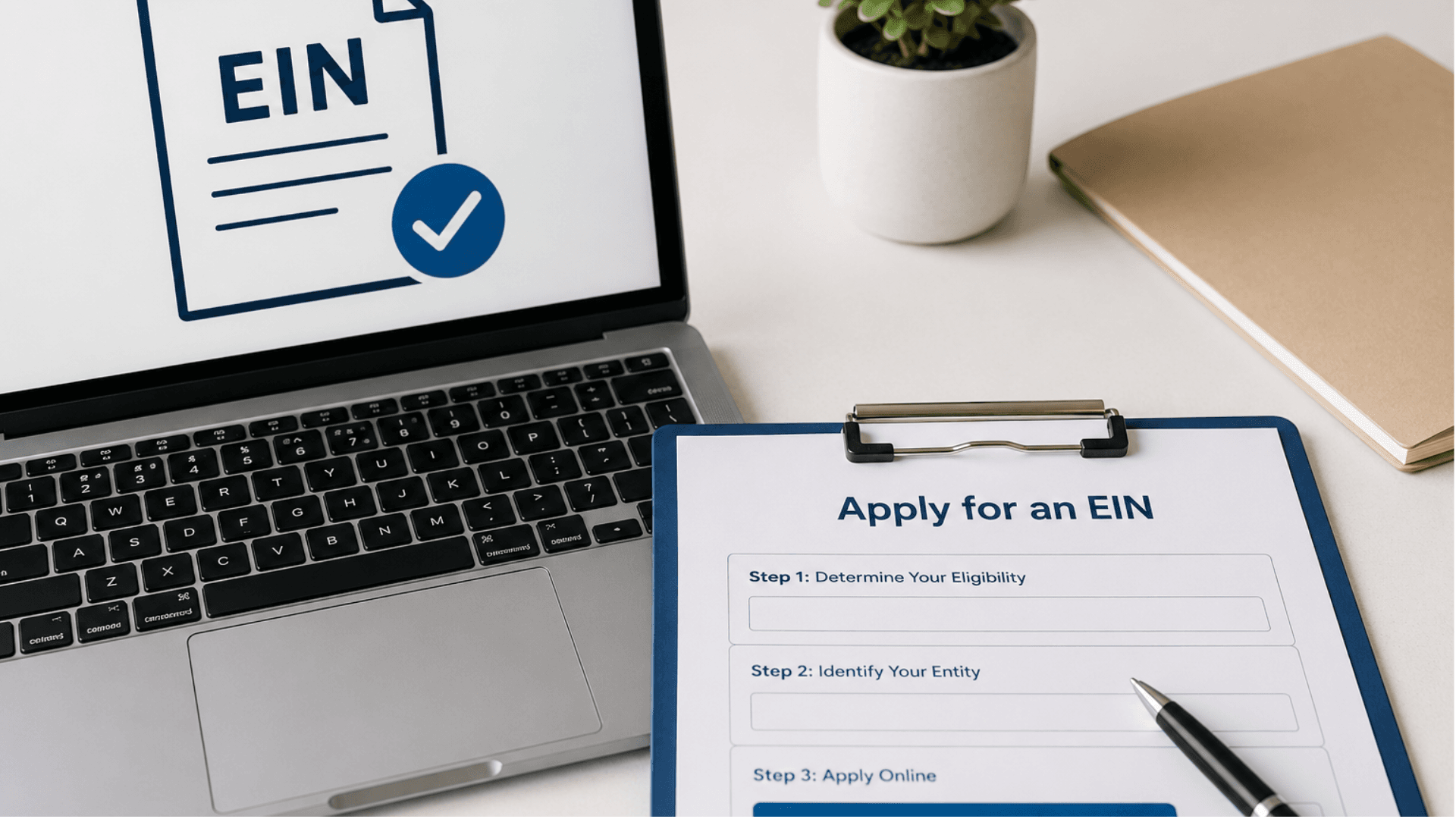
How to Get an EIN for a Nonprofit in Arizona
Getting your EIN is one of the fastest steps in building your nonprofit in Arizona, but only if you know exactly what the IRS requires and when to apply.

Arizona Nonprofit Certificate of Disclosure: Requirements and Filing Guide
Filing your Arizona nonprofit's Certificate of Disclosure is not optional, and getting it wrong at incorporation can delay your entire formation timeline.

Arizona Nonprofit Annual Reporting & Compliance Requirements: A Complete Guide
One missed deadline is all it takes to undo years of nonprofit work. A late annual report can trigger administrative dissolution, and three skipped Form 990 filings will cost you your tax-exempt status permanently, with no appeal. If you run an Arizona nonprofit, here is everything you need to file, when, and what it actually costs.

North Carolina Nonprofit Bylaws: Requirements, Contents & Best Practices
Your Articles of Incorporation give your nonprofit a legal name. Your bylaws are what actually make it run. Here's every clause North Carolina expects you to have, and the ones smart founders add anyway.

North Carolina Nonprofit Tax Exemption: Sales Tax, Income Tax & Requirements
Getting 501(c)(3) status from the IRS does not automatically make your organization tax exempt in North Carolina. This guide breaks down exactly what nonprofits owe, what they can recover, and how to stay compliant with state rules.
How to Get 501(c)(3) Tax-Exempt Status in North Carolina?
Getting 501(c)(3) status in North Carolina means clearing two separate hurdles: state incorporation and federal IRS approval. Here's the exact sequence, the NC-specific paperwork, and the costs involved.

North Carolina Nonprofit Annual Report: Filing Requirements, Deadlines & Fees
North Carolina nonprofit compliance just changed. Starting January 1, 2027, every Chapter 55A nonprofit corporation in the state must file an annual report with the NC Secretary of State, making it critical for organizations to understand exactly what is required, when it is due, and what happens if they miss it.
How to File Nonprofit Articles of Incorporation in North Carolina (Form N-01)
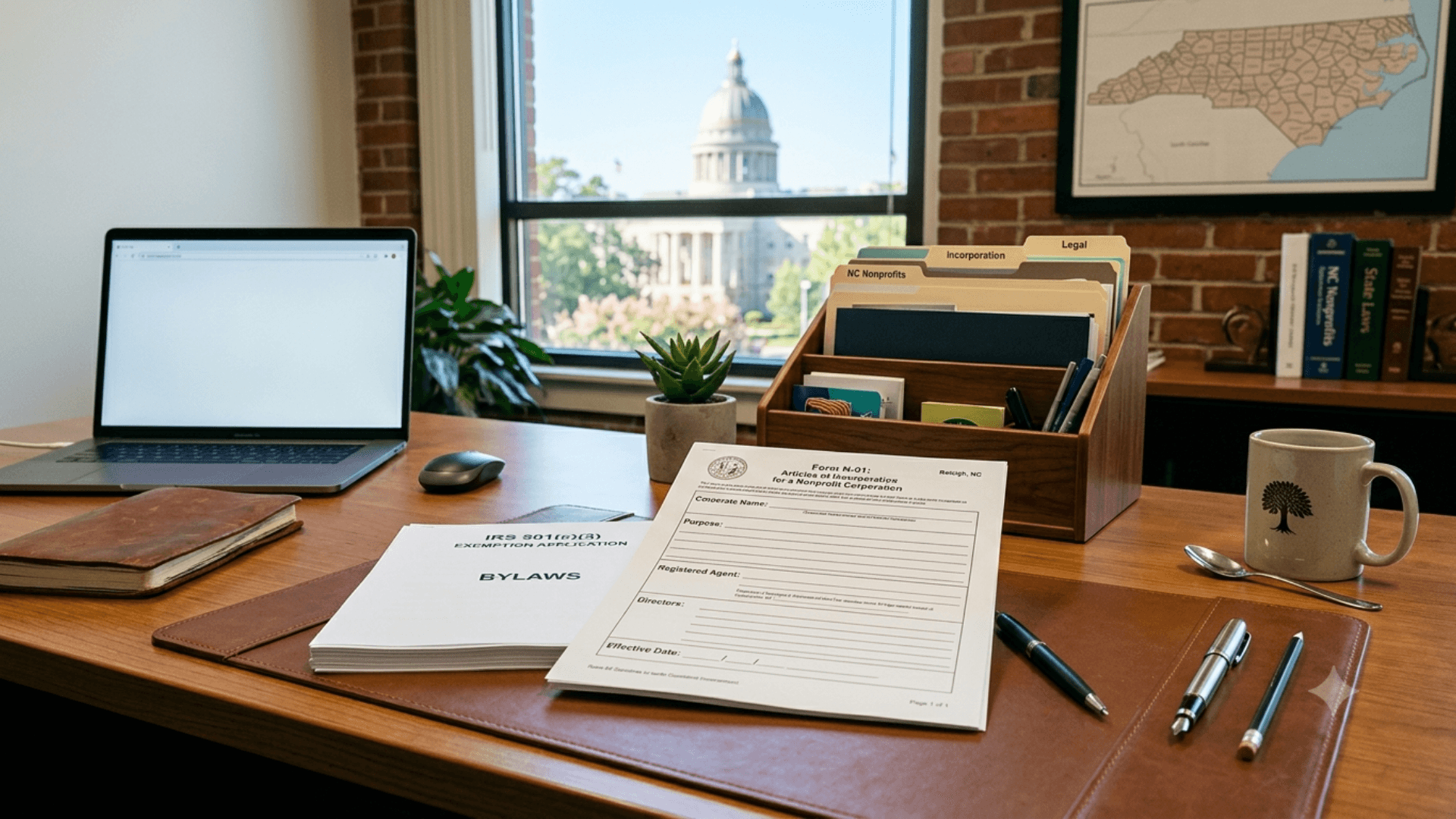
Filing your Articles of Incorporation is the moment your North Carolina nonprofit becomes a legal entity. Get this document wrong, and your entire 501(c)(3) application can be rejected months later.

North Carolina Nonprofit Costs: Filing Fees, 501(c)(3) Fees & Other Expenses
Most founders underestimate what it actually costs to start a nonprofit in North Carolina. They budget for one fee, miss two others, and end up stalling out mid-process—or worse, operating out of compliance without knowing it.

North Carolina Charitable Solicitation License: Requirements, Registration & Renewal
Before your North Carolina nonprofit sends a single fundraising email or hosts its first donation drive, state law requires one thing: a valid charitable solicitation license. Without it, every dollar you raise puts your organization at legal risk.
The Health and Growth of the U.S. Nonprofit Sector
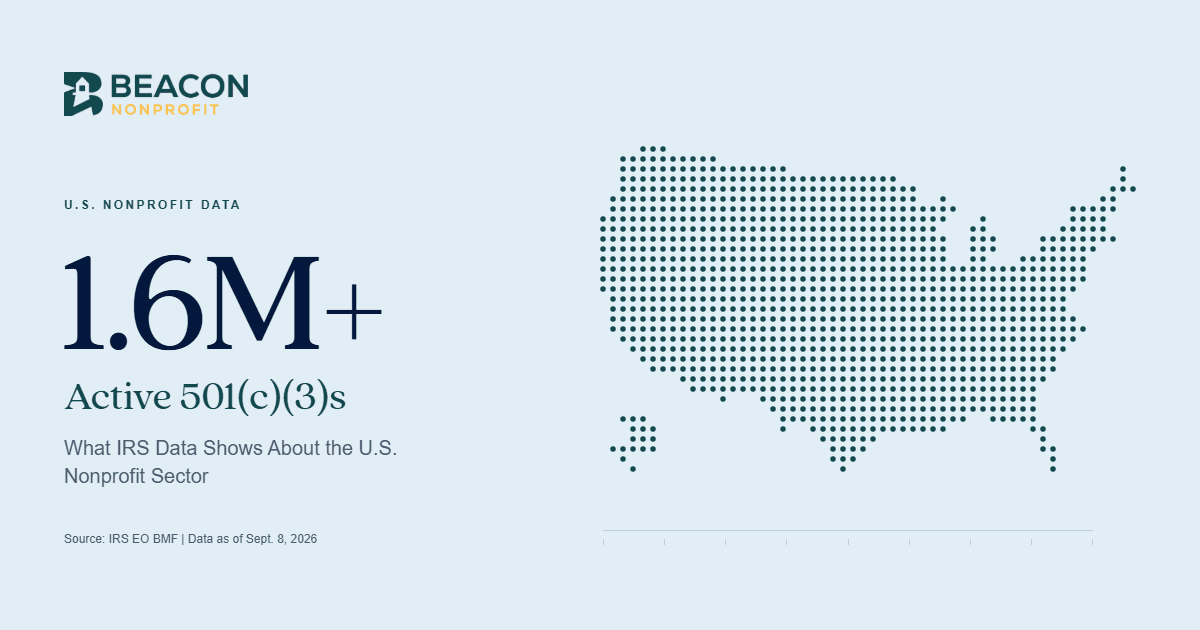
IRS data reveals a U.S. nonprofit sector of more than 1.6 million active 501(c)(3) organizations, and a third of them received federal recognition since 2020. Here's what the numbers show about sector size, composition, and long-term sustainability.

Do Nonprofits Need an Accountant?
Many nonprofit founders wonder whether they need an accountant, a bookkeeper, or both. This guide explains the difference between bookkeeping and accounting, when each is typically needed, and how nonprofits can make practical financial decisions as they grow.

What Is a Nonprofit Fiscal Year?
Your nonprofit's fiscal year is more than a date range. It shapes your Form 990 deadline, your audit cycle, and how your board reviews finances. Here's what every founder needs to know about choosing, reporting, and staying on top of your fiscal year.

Types of Nonprofit Structures Explained
Your legal structure shapes everything from how your board operates to how you apply for tax-exempt status. Learn the main nonprofit structures, what makes them different, and how to choose the right one for your mission.

Nonprofit LLC vs. Nonprofit Corporation: What's the Difference?
Thinking about the right structure for your nonprofit? This guide breaks down the key differences between a nonprofit LLC and a nonprofit corporation, so you can move forward with confidence.

Public Charity vs. Private Foundation: Understanding Nonprofit Types
Choosing between a public charity and a private foundation is an important early decision for nonprofit founders. This guide explains how each structure operates, the compliance responsibilities involved, and how to determine which model best supports your mission and long-term organizational goals.

Nonprofit Purpose, Mission, and Vision Statements: What's the Difference?
Purpose, mission, and vision statements each serve a different role in your nonprofit. This guide breaks down what each one means, how they work together, and how to write them with clarity and confidence.

North Carolina Nonprofit Board Requirements: Directors, Officers & Governance Rules
A clear look at how many directors North Carolina law requires, what officers you need, and the governance rules that keep your nonprofit compliant and fundable.

Nonprofit Donation Receipts: What Organizations Need to Know
If your nonprofit accepts donations, IRS rules require written acknowledgment for certain gifts. This guide breaks down exactly what donation receipts must include, when you're required to send them, and how to handle different contribution types correctly.

Does Your Nonprofit Need a Foreign Qualification?
If your nonprofit is operating in more than one state, you may need to register in each state where you're active, a process called foreign qualification. This guide explains what it is, when it's required, and how to stay compliant as your mission grows.

Who Is Responsible for Nonprofit Compliance?
Nonprofit compliance isn't one person's job. From the board of directors to nonprofit leadership and staff, different people may play a role in keeping an organization compliant. This guide breaks down who may be responsible for what and how clear ownership can help your nonprofit stay organized and in good standing.

Can You Sue a Nonprofit?
Yes, nonprofits can be sued, just like any other organization. This guide explains who can sue a nonprofit, the most common legal claims, how liability works, and what steps nonprofit founders can take to protect their organization.

Nonprofit Good Standing Requirements
Staying in good standing means your nonprofit has met its ongoing federal, state, and local requirements. This guide explains what those requirements are, why they matter, and how to make sure your organization stays on track.

How to Maintain Charitable Registration in Every State
Maintaining charitable registration helps nonprofits continue fundraising legally and operate with confidence. Understanding renewal requirements, charitable solicitation registration rules, and deadlines supports long-term compliance across multiple states.

Laws for Nonprofit Organizations: What You Need to Know
Running a nonprofit means following a specific set of laws at both the federal and state level. This guide breaks down the key legal requirements every nonprofit founder needs to understand, from IRS rules and 501(c)(3) status to state registration and ongoing compliance.

What Is a Nonprofit DBA (and Does Your Nonprofit Need One)?
A nonprofit DBA lets your organization operate under a name that's different from its legal name. This guide explains what a DBA is, when nonprofits use one, and how to decide if your organization needs one.

Your First Year as a Nonprofit: Key Deadlines and Filings
Your nonprofit’s first year sets the foundation for long-term success. Learn the key deadlines and filings most nonprofits face in their first year and how to stay organized from day one.

IRS Penalties for Nonprofit Filing Errors
Filing errors can happen to any nonprofit, but understanding the IRS penalties involved helps founders respond quickly and stay in good standing. This guide breaks down common penalties, how to avoid them, and what to do if your organization falls behind.

Nonprofit Financial Statements Explained
Nonprofit financial statements are the official records that show how your organization earns and spends money. This guide explains the four core statements every nonprofit should know, how to read them, and why they matter for compliance, donors, and long-term health.

Nonprofit Bookkeeping Basics for New Organizations
Nonprofit bookkeeping means recording every transaction, tracking income and expenses, and reconciling your accounts regularly. This guide covers the day-to-day habits every new nonprofit founder needs to keep their books organized and IRS-ready.

Nonprofit Budget Basics for New Organizations
A clear budget is one of the first tools your nonprofit needs. This guide walks first-time founders through the basics of nonprofit budgeting, from planning income and expenses to building financial habits that keep your organization on track.

Unrelated Business Income for Nonprofits: What It Is and When It Applies
Nonprofits can earn income from activities outside their mission, but that income may be taxable. Here's what unrelated business income is, how the IRS defines it, and what your organization needs to know to stay compliant.

7 Steps to Write a Nonprofit Grant Proposal That Gets Noticed
Grant funding can open new opportunities for your nonprofit. Writing a strong proposal takes more than filling out forms. This guide walks you through the essential steps, from explaining your mission to preparing a clear budget, so you can write a proposal that gets noticed, even if this is your first time applying.

Do Nonprofits Pay Taxes?
Do nonprofits pay taxes? The answer depends on the type of tax and whether the organization has received 501(c)(3) status. While many nonprofits qualify for federal income tax exemption, they may still have ongoing tax and filing responsibilities.
Where Active 501(c)(3)s Have Recent IRS Ruling Dates: A State-by-State Analysis
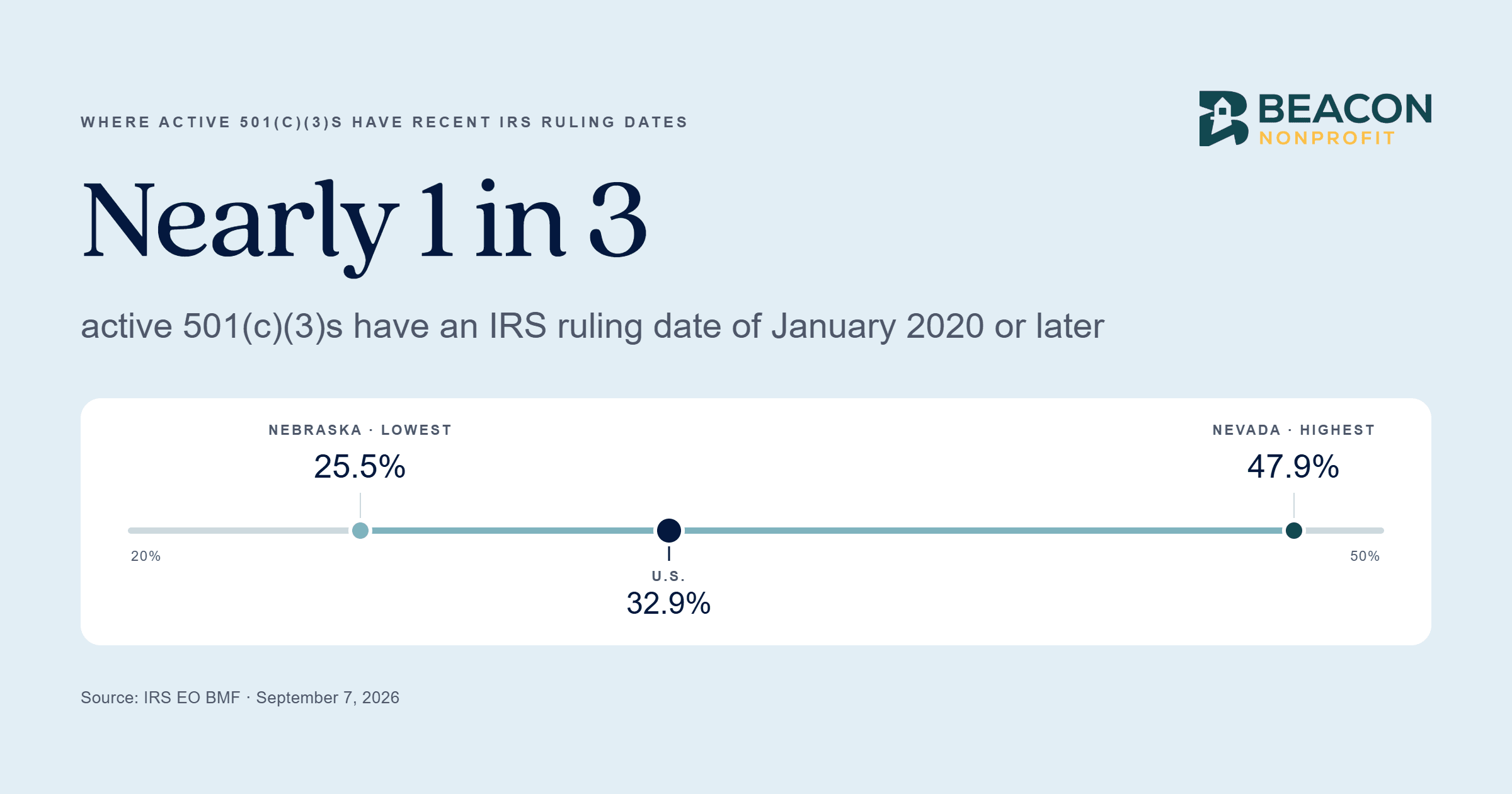
Nearly 1 in 3 active 501(c)(3) organizations in the U.S. have an IRS ruling date of January 2020 or later. Beacon Nonprofit's analysis of the IRS Exempt Organizations Business Master File reveals how that share varies across all 50 states and Washington, D.C.

Corporate Sponsorships for Nonprofits: How They Work
Corporate sponsorships give nonprofits a reliable funding stream while offering companies meaningful community visibility. This guide explains how sponsorships work, how to find and approach sponsors, and how to stay compliant with IRS rules.
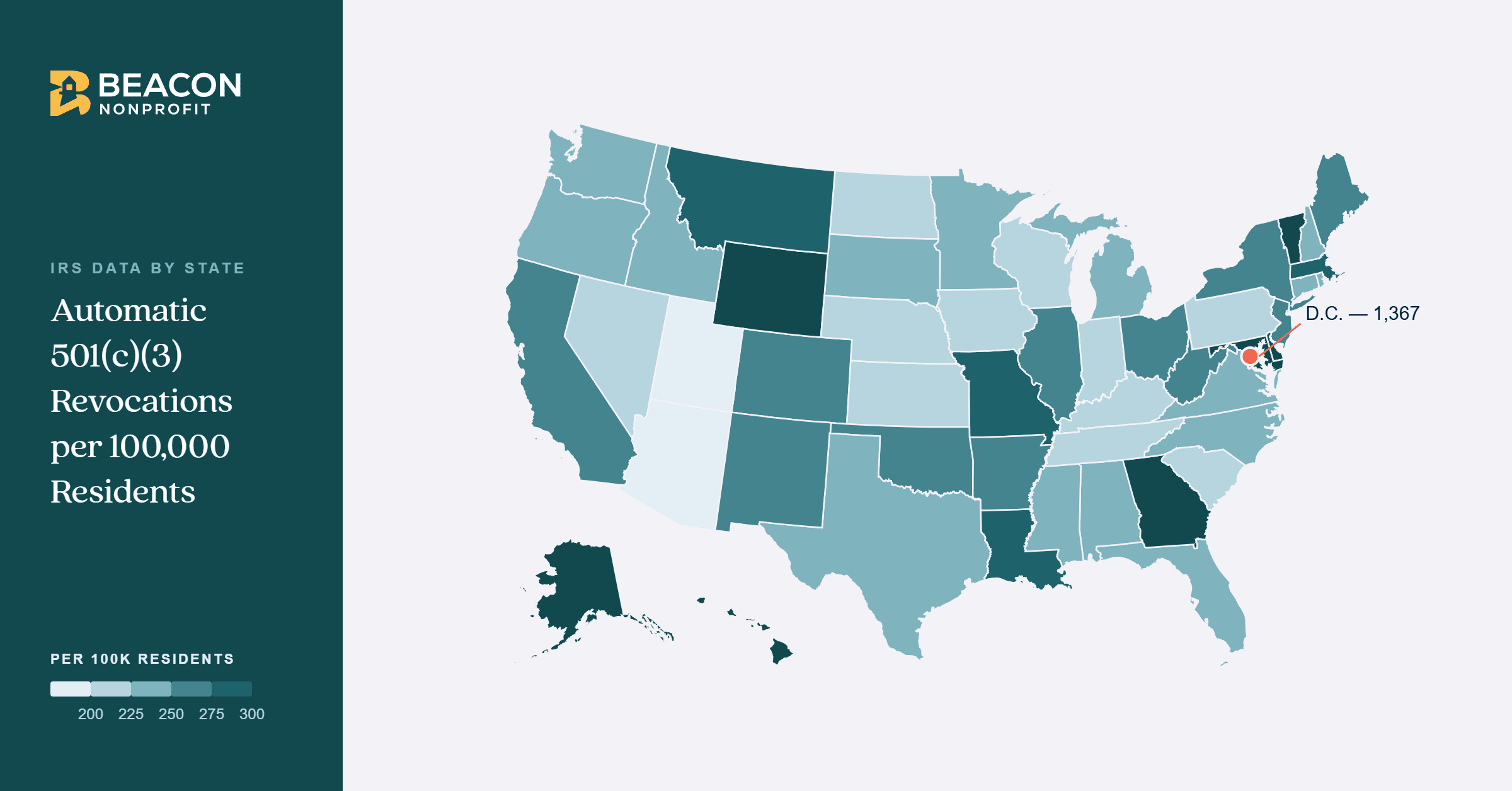
Automatic 501(c)(3) Revocations in America: IRS Data by State
See how automatic 501(c)(3) revocations vary across the United States, including state-by-state rates, historical trends, and what nonprofits need to know about maintaining tax-exempt status.
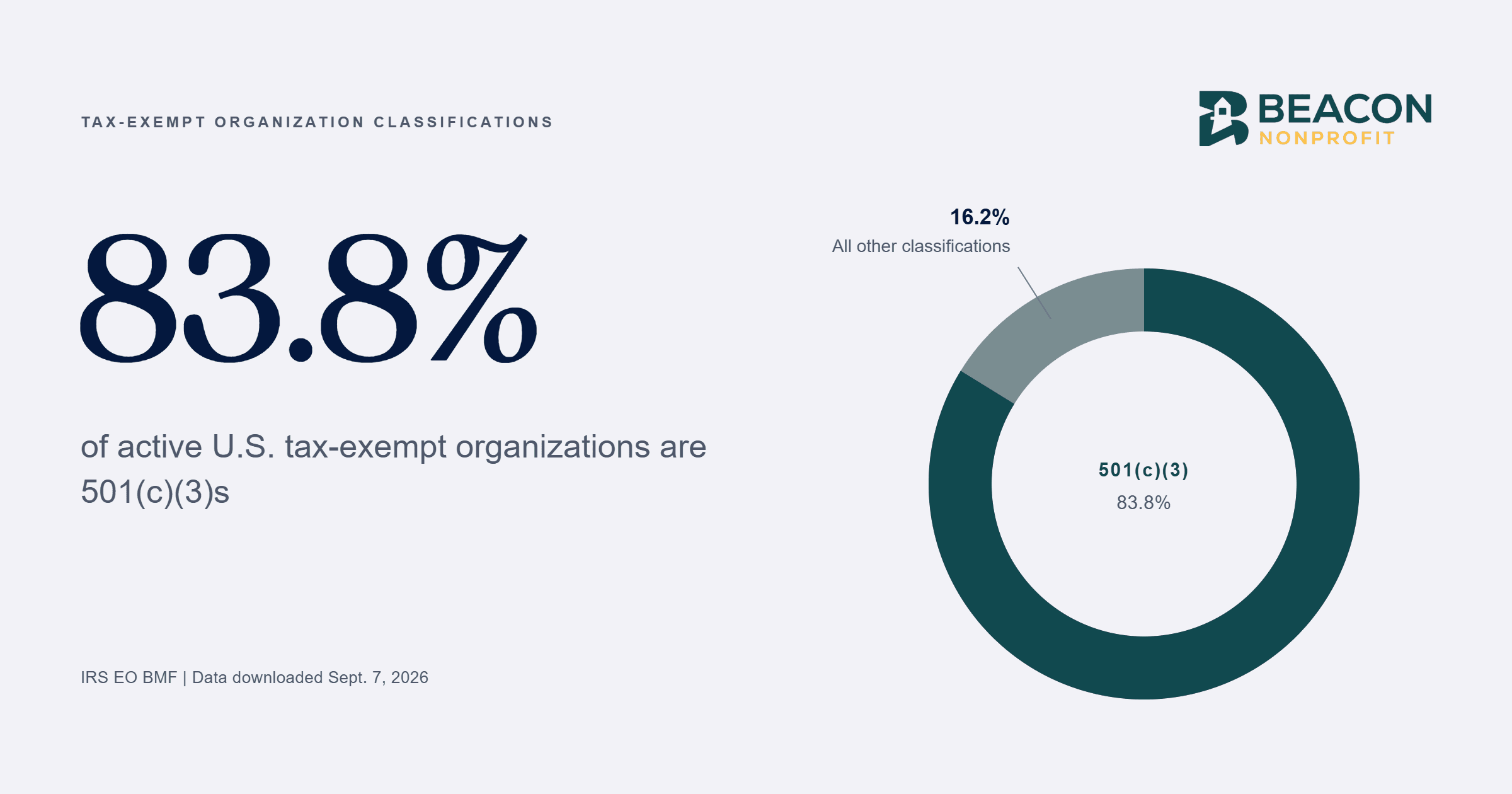
Tax-Exempt Organization Classifications: What the IRS Data Shows
According to Beacon Nonprofit's analysis of IRS Exempt Organizations Business Master File data, 501(c)(3) organizations account for 83.8% of all active tax-exempt organizations in the United States. This article breaks down how the major classifications compare, what the data shows, and how to think about classification when starting a nonprofit.
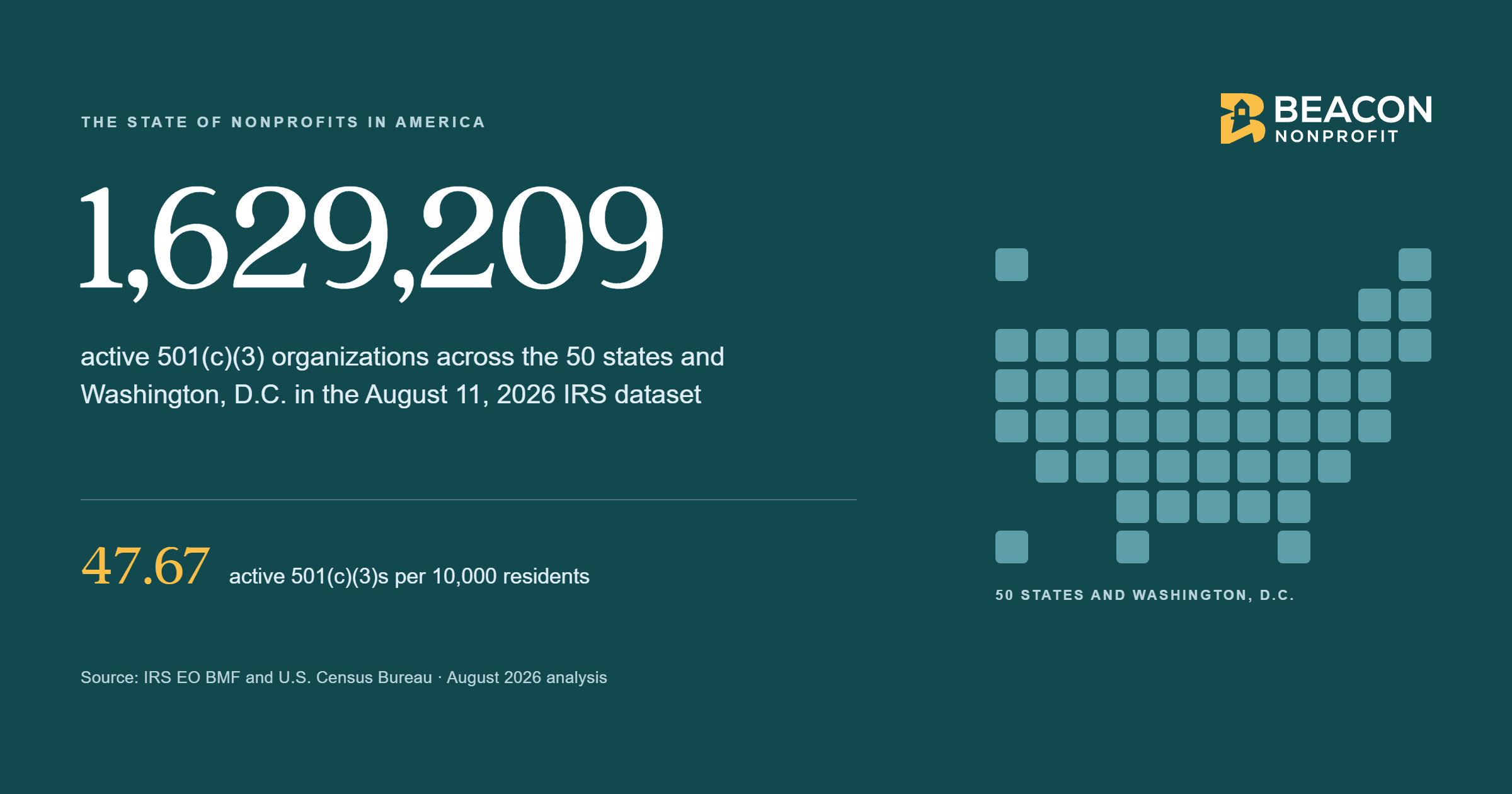
The State of Nonprofits in America: A State-by-State Analysis
How does the nonprofit sector differ from state to state? This analysis of IRS and U.S. Census data compares active 501(c)(3) organizations by state, population, mission area, and IRS recognition date.

How to Apply for 501(c)(3) Status in California
Applying for 501(c)(3) status in California involves more than filing with the IRS. Understanding the required state registrations and exemption filings upfront can help you avoid costly delays and compliance issues.

How to Register a Nonprofit Corporation in Georgia
Starting a nonprofit in Georgia means dealing with two different governments at once — the state and the IRS — and missing a single clause in your paperwork can delay your tax-exempt status by months.
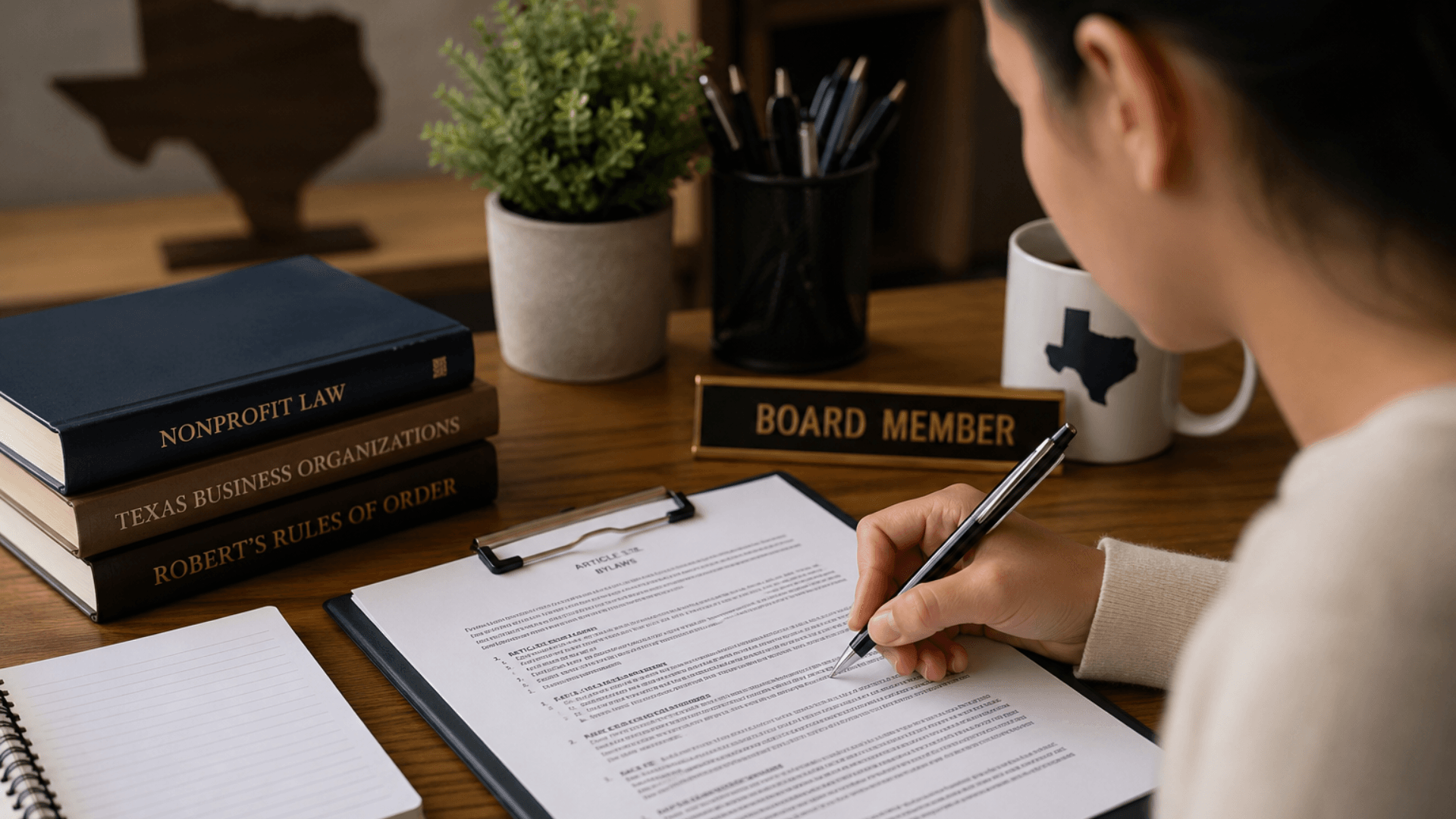
How to Write Nonprofit Bylaws in Texas
Well-drafted bylaws provide a clear framework for managing your nonprofit and reducing governance issues down the road. Before you start drafting, review these key points every Texas nonprofit should know.
How to Apply for 501(c)(3) Status in Texas
Applying for 501(c)(3) status in Texas can seem complex, but the process becomes much easier when you know the required forms, timelines, and state-specific steps before filing.
How to Open a Bank Account for a Georgia Nonprofit
Opening a nonprofit bank account in Georgia requires more than just your incorporation documents. Understanding the required paperwork and banking process can help you avoid delays and get your organization up and running faster.

Nonprofit Management 101: Building a Strong and Sustainable Organization
Learn nonprofit management basics, including board governance, financial oversight, volunteer coordination, and compliance responsibilities that support long-term sustainability.

#1 Checklist to Starting a Nonprofit Organization in 2026

Starting a nonprofit in 2026 doesn't have to be overwhelming. This step-by-step checklist walks you through everything — from defining your mission to filing for 501(c)(3) tax-exempt status — so you can launch your organization with confidence.

How to Write a Nonprofit Mission Statement (With Examples)
Your nonprofit's mission statement is more than a sentence on your website. It tells donors, volunteers, the IRS, and your community exactly what you stand for and who you serve. Here's how to write one that's clear, focused, and built to last.

How Do Nonprofits Find Donors?
Finding donors is one of the first big challenges every new nonprofit faces. This guide breaks down the most practical strategies, from personal outreach to grants to social media, so you can build a sustainable donor base from day one.

First-Year Fundraising Strategies for Small Nonprofits
Raising money in your nonprofit's first year can feel daunting, but the right strategies make it manageable. This guide covers practical fundraising approaches for new founders, from building donor relationships to running simple campaigns and exploring early grant opportunities.

What Is a Fiscal Sponsor and How Does It Work
Fiscal sponsorship lets you run a charitable project under an established nonprofit's tax-exempt status without forming your own organization. Learn how it works, when it makes sense, and how it compares to starting a nonprofit of your own.

501(c)(3) vs. 501(c)(4): What Is the Difference for Nonprofits?
Not all nonprofits operate under the same tax classification. Two of the most common tax-exempt classifications are 501(c)(3) charitable organizations and 501(c)(4) social welfare organizations. Understanding the difference helps founders choose the classification that best fits their mission, fundraising plans, and long-term goals.

How Much Does It Cost to Start a Nonprofit in California
Starting a nonprofit in California involves more than good intentions — it involves real filing fees, multiple government agencies, and a few financial traps that catch founders off guard. Here's exactly what to budget.

How Much Does It Cost to Start a Nonprofit in Georgia?
Before filing your nonprofit paperwork, it's important to understand the full range of startup and compliance costs involved. From incorporation fees to IRS applications, here's what you can expect to pay in Georgia.

How to File Annual Reports and Renewals for Your Nonprofit
Annual reports and renewal filings help nonprofit organizations stay compliant and maintain legal recognition. Understanding these responsibilities early can support long-term stability and mission success.
8 Common Nonprofit Compliance Mistakes (and How to Avoid Them)
Even well-run nonprofits make mistakes. A missed filing, late report, or outdated record can cost your organization time, money, and credibility. This guide explains the most common nonprofit compliance mistakes and how to prevent them so your nonprofit stays transparent, tax-exempt, and trusted by donors.

Why California Is a Great State to Start a Nonprofit
California offers a unique combination of funding access, community support, and long-term growth opportunities for nonprofits. Understanding these advantages can help founders make informed decisions before launching.

Benefits of Starting a Nonprofit Organization in Georgia
Georgia offers more than just tax savings for nonprofits. From funding opportunities to legal protections, the advantages can create a strong foundation for long-term impact.

Can One Person Start a Nonprofit in Texas?
You do not need a large team to get started, but Texas nonprofits cannot be governed by a single person. Knowing the legal requirements upfront will help you choose the right structure and avoid costly mistakes.

Common Mistakes When Starting a Nonprofit in Texas
Many Texas nonprofits face preventable challenges during their first few years due to compliance, governance, and fundraising missteps. Knowing where founders often go wrong can save time, money, and unnecessary setbacks.

Best Practices for Managing a Nonprofit Organization in California
Strong nonprofit management creates the foundation for lasting impact. The following best practices will help California organizations navigate state regulations, protect resources, and support sustainable growth.

What Is the Nonprofit Public Support Test and Why Does It Matter?
The public support test is how the IRS determines whether a 501(c)(3) nonprofit qualifies as a public charity. Understanding the one-third threshold, what counts as public support, and how to track it from day one can help your organization stay in good standing for the long haul.

Nonprofit Organization vs Foundation: What's the Difference?
Trying to figure out the difference between a nonprofit organization and a foundation? Both are tax-exempt, mission-driven entities, but they're structured, funded, and operated differently. This guide breaks down what sets them apart so you can choose the right path for your goals.

How to Create Nonprofit Bylaws in California
Bylaws decide who really runs your nonprofit day-to-day — and California doesn't leave much room for guesswork about the details. Get them wrong, and you're not just inviting a messy board meeting; you're putting your 501(c)(3) timeline at risk.

Common Mistakes to Avoid When Starting a Nonprofit in Georgia
Starting a nonprofit in Georgia can be rewarding, but small filing and compliance mistakes often create costly setbacks. Understanding these common issues early can save time, money, and unnecessary delays.

Best Banks for Nonprofits in Texas
Finding the right bank for your Texas nonprofit is easier than you think — but knowing what to look for upfront is what separates a smooth setup from months of unnecessary fees and administrative friction.

Common Mistakes to Avoid When Starting a Nonprofit in California
Many California nonprofits run into problems not because of their mission, but because they miss critical legal and compliance requirements. Knowing these pitfalls before you begin can save significant time, money, and frustration.

California Charitable Registration Requirements
Before accepting donations or launching fundraising campaigns, nonprofits must understand California's charitable registration requirements. Knowing the filing deadlines, forms, and renewal obligations can save significant compliance headaches later.

Best Fundraising Strategies for Texas Nonprofits
Texas offers nonprofits access to major donors, strong corporate support, and high-impact regional giving campaigns. Knowing where to focus your efforts can make a significant difference in long-term fundraising results.

Texas Nonprofit Compliance Checklist
Compliance mistakes can jeopardize your tax-exempt status, grant eligibility, and organizational credibility. This Texas nonprofit compliance checklist highlights the key requirements you need to stay on track

How Much Does It Cost to Start a Nonprofit in Texas?
Starting a nonprofit in Texas is more affordable than most founders expect—but knowing every fee upfront is what separates a smooth launch from a costly surprise.
Can You Start a Nonprofit Without Money in California?
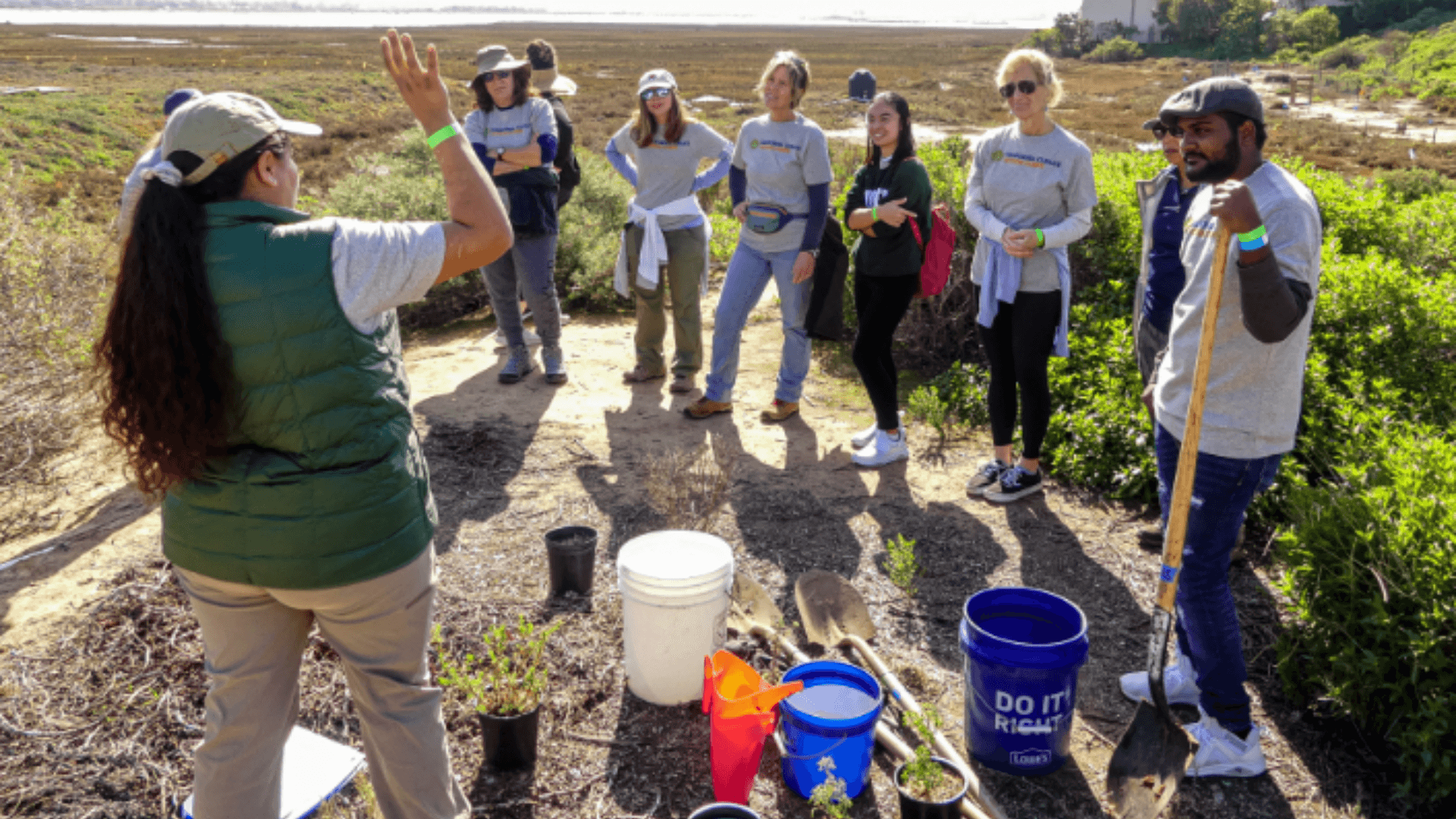
Starting a nonprofit with little or no money is possible, but there are a few legal and financial realities every founder should know first.

Do Georgia Nonprofits Need a Registered Agent?
Every Georgia nonprofit corporation must designate a registered agent to stay compliant with state law and ensure important legal documents are received promptly.
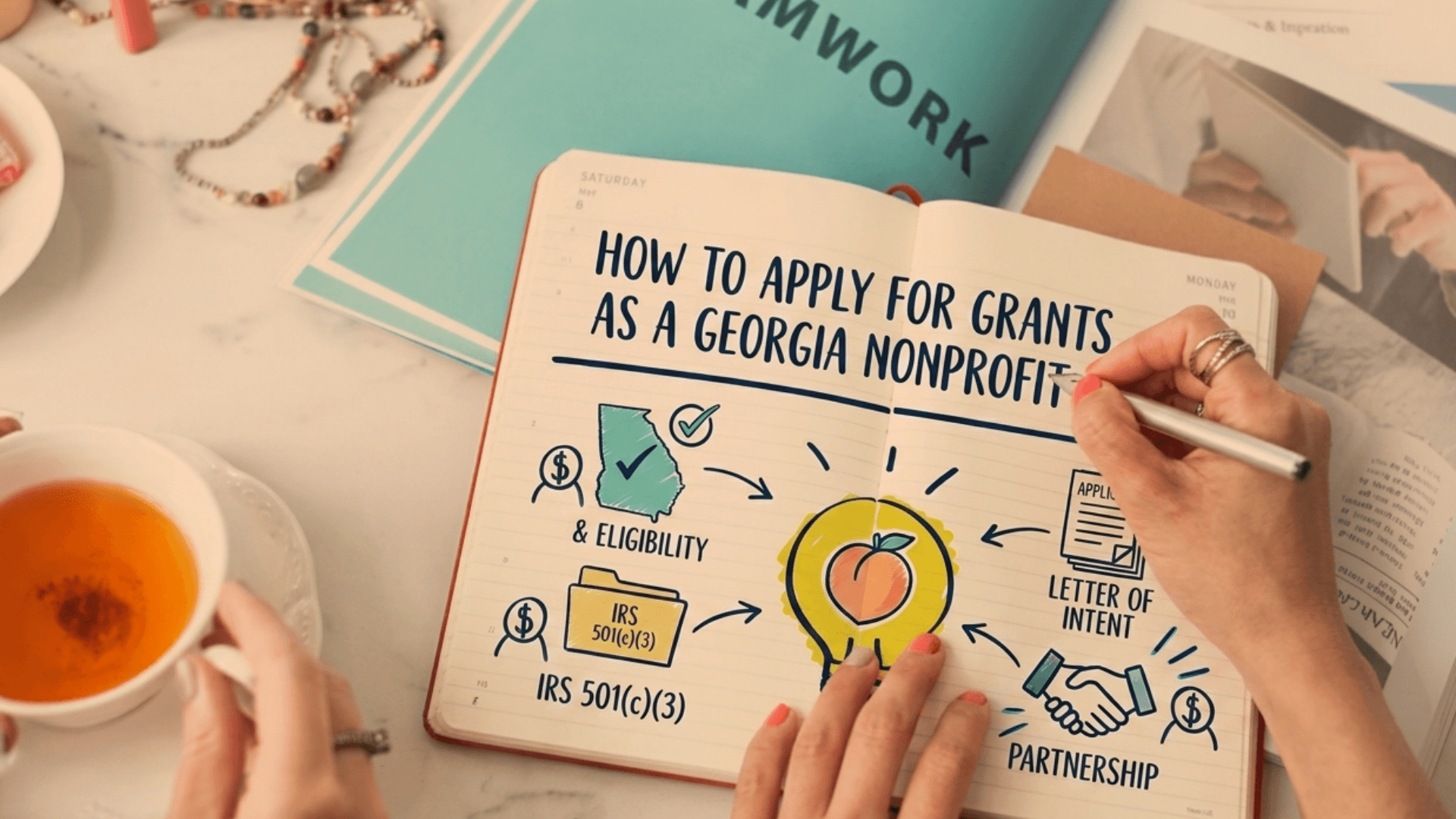
How to Apply for Grants as a Georgia Nonprofit
Grant funding can help Georgia nonprofits expand programs, strengthen operations, and increase their impact in local communities. Understanding the grant application process and preparing the right documents early can significantly improve your chances of securing funding.
California Nonprofit Compliance Checklist
California nonprofit compliance involves more than filing a yearly IRS return. Organizations must track multiple state and federal requirements throughout the year to avoid penalties, suspension, or loss of tax-exempt status.

Georgia Nonprofit Registration Timeline Explained
Starting a nonprofit in Georgia involves several state and federal filings, each with its own timeline. Knowing what happens at each stage can help you plan ahead and avoid costly mistakes.
Featured Nonprofit Guides
Explore popular nonprofit guides with step-by-step advice on formation, structure, and compliance to help you launch confidently and grow your mission.
Get Nonprofit Tips and Compliance Guidance.
Subscribe for updates, insights, and resources that help you stay compliant and grow your mission.