Charitable Solicitation Registration: What Nonprofits Need to Know

Key Takeaways
Many states require nonprofits to register before soliciting donations from their residents, and registration may be required even before a nonprofit receives 501(c)(3) approval.
Charitable solicitation registration is a state-level requirement separate from federal 501(c)(3) tax-exempt status. Rules, fees, deadlines, and exemptions vary by state.
Nonprofits that fundraise across state lines may need to register in multiple states, not just the state where they were incorporated.
Some organizations may qualify for exemptions from registration, including certain religious, educational, membership, or smaller charitable organizations. Exemptions vary by state and should be verified before fundraising.
Failing to meet applicable charitable solicitation requirements can result in fines, orders to stop soliciting donations, corrective filings, or other consequences under state law.
Learn what charitable solicitation registration is, when your nonprofit may need to register, and how state fundraising requirements fit into nonprofit compliance.
If your nonprofit is getting ready to raise money, charitable solicitation registration is an important requirement to understand. Many states require charitable organizations to register with a state agency before soliciting donations from their residents.
Knowing where and when your nonprofit needs to register is part of building a strong approach to nonprofit compliance.
Here's what charitable solicitation registration is, when it may apply, and what your nonprofit should know before it starts fundraising.
What Is Charitable Solicitation Registration?
Quick Answer
Charitable solicitation registration is the process of registering with a state before soliciting charitable donations from its residents when required by state law. Requirements vary by state, but registration is typically handled by the attorney general, secretary of state, or another state agency.
You may also see charitable solicitation registration referred to as charitable registration, charity registration, or state charitable registration. The terminology varies by state, but these terms generally refer to state registration requirements for organizations that solicit charitable contributions.
Is Charitable Solicitation Registration the Same as 501(c)(3) Status?
No. Charitable solicitation registration and 501(c)(3) tax-exempt status are separate requirements.
The IRS grants federal 501(c)(3) tax-exempt status. Individual states regulate charitable solicitation and fundraising within their jurisdictions. Receiving 501(c)(3) status does not automatically satisfy a state's charitable solicitation registration requirements.
Many states require charitable organizations to register before soliciting donations from their residents, although requirements and exemptions vary by state.
Why Charitable Registration Exists
Charitable solicitation laws help states oversee fundraising activity and protect donors. Depending on the state, nonprofits may be required to register, provide information about their organization and finances, and submit periodic reports.
Registration requirements vary, but a state may request information such as:
- Formation documents
- Financial statements or other financial information
- Information about officers and board members
- A description of the organization's charitable purpose
- Information about paid fundraisers or solicitation professionals, when applicable
Some of this information may become part of the public record, giving donors and state regulators greater visibility into organizations raising charitable funds.
Which States Require Charitable Registration?
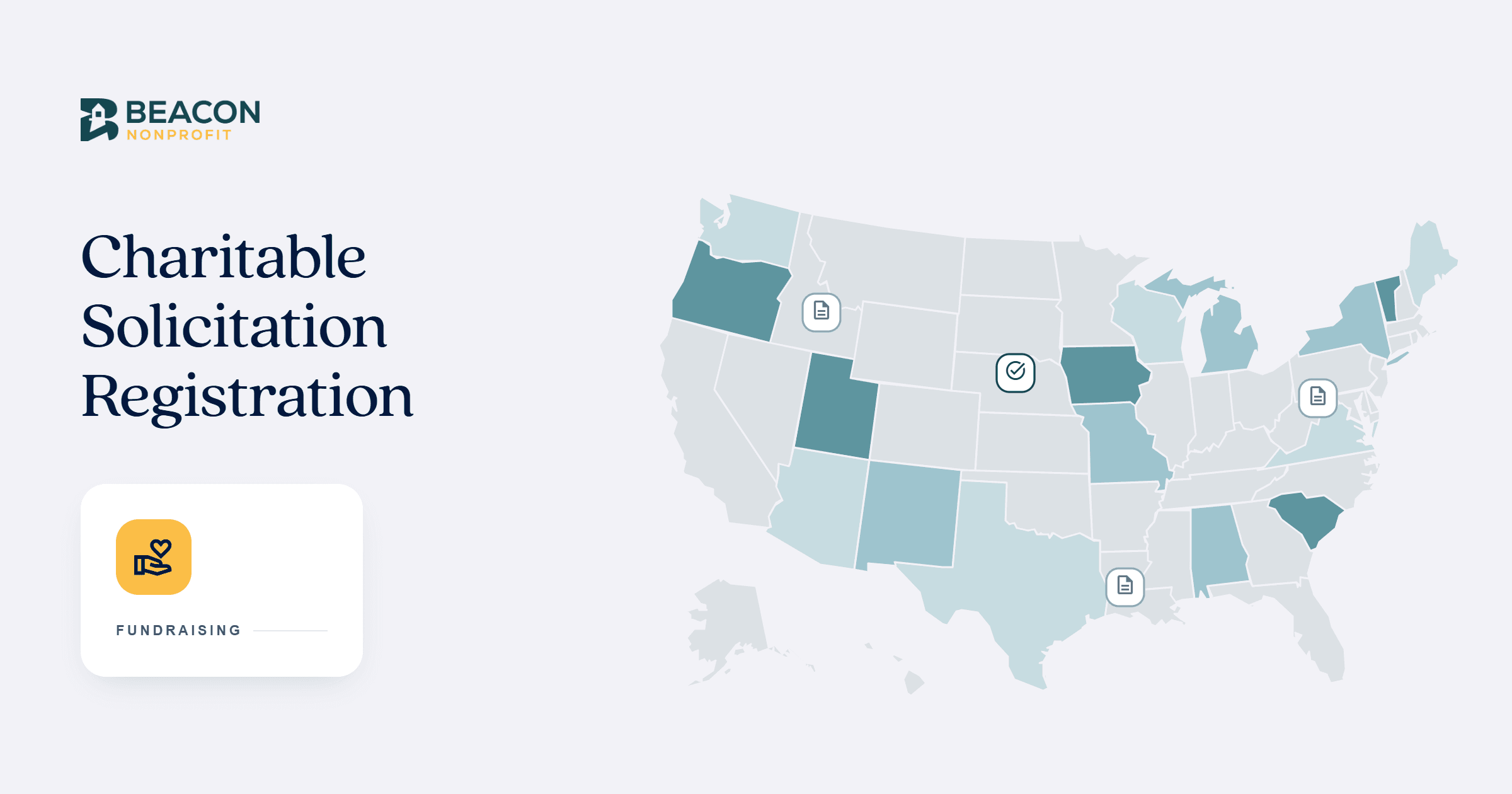
Approximately 40 states have charitable solicitation statutes, according to the IRS. However, registration requirements, exemptions, forms, and filing procedures vary considerably by state.
The NASCO (the National Association of State Charity Officials) provides links to state agencies that oversee charitable organizations. Because requirements can change, nonprofits should verify the current rules with the appropriate state agency before fundraising in a state.
For example, states with charitable registration requirements include:
- California, where charitable organizations may have registration and reporting obligations through the California Attorney General's Registry of Charities and Fundraisers
- New York, where applicable charitable organizations register with the New York Attorney General's Charities Bureau
- North Carolina, where charitable solicitation licensing is administered by the Secretary of State
Not every state has a general charitable solicitation registration requirement. Texas, for example, does not require most charities or nonprofit organizations to register with the state solely because they solicit donations, although specific requirements apply to certain types of organizations and activities.
There is no single federal charitable solicitation registration that covers every state, so nonprofits planning to fundraise across state lines should check the requirements in each state where their activities may trigger registration.
When Does Charitable Solicitation Registration Apply?
In many states, a nonprofit must register before it begins soliciting contributions from residents of that state. However, exactly what counts as solicitation and when registration is triggered depends on state law.
This is also separate from the timing of your federal tax-exempt application. If you're wondering whether you can fundraise before 501(c)(3) approval, remember that state charitable solicitation requirements may apply even while your federal application is pending.
If you're exploring how nonprofits get funding and planning your first fundraising activities, check the applicable state requirements before you begin asking for donations.
Fundraising activities such as emails, donation requests, online campaigns, or other appeals may be considered charitable solicitation under applicable state law. Online fundraising can make the rules more complicated when a nonprofit reaches potential donors in multiple states.
What the Registration Process Looks Like
The process varies by state, but these are common steps a nonprofit may need to take:
- Determine which states apply. Review the requirements in your home state and other states where you plan to solicit contributions.
- Gather the required information. Depending on the state, this could include formation documents, governing documents, IRS information, financial records, and information about your nonprofit's leadership. As you prepare your financial records, make sure your donation acknowledgment practices are in order too. Our guide on nonprofit donation receipts explains what to include and when written acknowledgment is legally required.
- Complete the required registration. Follow the instructions from the state agency responsible for charitable organizations. Some states accept the Unified Registration Statement (URS), while others require their own forms or online filing process.
- Pay any required filing fee. Fees vary by state and may depend on factors such as the organization's contributions or revenue.
- Submit the registration. Filing methods and processing times vary by state.
- Track ongoing requirements. Registration may come with renewal or periodic reporting obligations, depending on the state.
Once your nonprofit is registered, how to maintain charitable registration in every state can help you understand the ongoing requirements that may apply.
If your nonprofit is also beginning to build its fundraising program, first-year fundraising strategies for small nonprofits can help you plan your fundraising alongside your compliance responsibilities.
Who May Be Exempt From Charitable Registration?
Some states exempt certain organizations from charitable solicitation registration. Depending on the state, exemptions may be available for organizations such as:
- Religious organizations
- Certain small charitable organizations
- Some membership organizations
- Certain educational institutions
The qualifications for these exemptions vary significantly. An organization that is exempt in one state may still need to register in another.
Even if your nonprofit appears to qualify for an exemption, check the requirements with the appropriate state agency. Some states may require an organization to apply for or document its exemption rather than simply assume it applies.
What Happens If a Nonprofit Solicits Without Registering?
Failing to follow an applicable state's charitable solicitation requirements can result in consequences for a nonprofit. The specific enforcement options and penalties depend on state law.
Depending on the jurisdiction and circumstances, consequences may include:
- Fines or other monetary penalties
- Orders to stop soliciting donations
- Additional filings or corrective action
- Restrictions on future fundraising activity
Rather than waiting until a filing or renewal is missed, nonprofits can build charitable registration into their broader compliance calendar from the beginning.
Understanding what happens if a nonprofit misses a filing deadline can also help your organization prepare for other state and federal filing responsibilities.
How Charitable Solicitation Registration Fits Into Broader Compliance
Charitable solicitation registration is one part of a nonprofit's broader compliance responsibilities. Depending on the organization and where it operates, those responsibilities can also include state annual reports, Form 990-series filings, charitable registration renewals, and other state requirements.
A few related areas to understand:
- Nonprofit filing requirements: federal and state overview explains how state and federal filings fit together.
- Key deadlines and filings in your first year can help you identify important early compliance dates.
- Annual nonprofit filings explained covers recurring filing obligations.
- Who is responsible for nonprofit compliance? explains how compliance responsibilities may be shared within an organization.
- Nonprofit good standing requirements explains how different state requirements can affect your nonprofit's standing.
IRS Publication 4220 also identifies state registration requirements as an area public charities may need to address in addition to their federal tax obligations.
How Beacon Nonprofit Can Help
Starting a nonprofit involves more than filing formation documents. Founders also need to understand the state and federal requirements that may apply as their organization begins operating and raising funds.
When you start your nonprofit with Beacon, you can build a stronger foundation by understanding what comes next, from formation and 501(c)(3) status to the ongoing compliance responsibilities your organization may need to manage.
The goal is to give your mission a strong start and help you move forward with greater clarity and confidence.
- NASCO (National Association of State Charity Officials). Charitable Solicitation Registration Overview and Unified Registration Statement.
- IRS. Publication 4220: Applying for 501(c)(3) Tax-Exempt Status.
- California Attorney General. Registry of Charitable Trusts.
- New York State Attorney General. Charities, Nonprofits & Fundraisers.
- North Carolina Secretary of State. Charitable Solicitation Licensing.
- National Council of Nonprofits. Charitable Solicitation Registration.
Frequently Asked Questions
Not necessarily. A nonprofit may need to register in multiple states where it solicits donations, but requirements, exemptions, and what triggers registration vary by state. If you plan to fundraise across state lines, check the rules in each state where you will solicit contributions.
In some states, yes. Charitable solicitation registration is separate from federal 501(c)(3) tax-exempt status, so state registration requirements may apply while your IRS application is still pending. Check the applicable state requirements before you begin fundraising.
Registration fees vary by state. Some states charge no fee, while others base fees on factors such as an organization's revenue or contributions. Check with the state agency that oversees charitable organizations for current filing fees and requirements.
It depends on the state. Many states require registered charitable organizations to renew or submit periodic reports, but deadlines and filing requirements vary. Track the requirements for each state where your nonprofit is registered so you know when future filings are due.
The Unified Registration Statement (URS) is a standardized form designed to help charitable organizations with registration in multiple states. Some states accept the URS, while others require their own forms, online filings, or additional information. Check each state's current requirements before relying on the URS for registration.
Related Articles
Nonprofit Compliance Checklist: What Every Founder Needs to Know
Stay organized and protect your mission with this nonprofit compliance checklist. Learn which filings apply after formation, including annual reports, IRS Form 990, charitable solicitation registration, and more.
Can You Fundraise Before 501(c)(3) Approval?
Waiting on your 501(c)(3) approval can feel uncertain, especially if you are ready to begin fundraising. The good news is that many nonprofits can start raising funds before IRS approval. Here is what you need to know to move forward with clarity and confidence.

How Nonprofits Get Funding: Complete Guide for New Founders
Launching a nonprofit takes passion. But sustaining it takes funding. From grants and donations to earned income and sponsorships, understanding where your money can come from is key to building a mission that lasts. This guide from Beacon explains the most common funding sources for new 501(c)(3) founders and how to approach each one with confidence.

How to Maintain Charitable Registration in Every State
Maintaining charitable registration helps nonprofits continue fundraising legally and operate with confidence. Understanding renewal requirements, charitable solicitation registration rules, and deadlines supports long-term compliance across multiple states.

First-Year Fundraising Strategies for Small Nonprofits

Raising money in your nonprofit's first year can feel daunting, but the right strategies make it manageable. This guide covers practical fundraising approaches for new founders, from building donor relationships to running simple campaigns and exploring early grant opportunities.

What Happens if a Nonprofit Misses a Filing Deadline?
Missing a filing deadline can feel stressful, especially for new nonprofit leaders. This guide explains what typically happens when a nonprofit misses a filing deadline, how issues are often resolved, and how organizations can move forward with clarity and confidence.

Nonprofit Filing Requirements: Federal and State Overview
Understanding nonprofit filing requirements doesn't have to be overwhelming. This guide breaks down what you need to file at the federal and state levels, from your EIN and 501(c)(3) application to annual Form 990s, state reports, and charitable solicitation registration. Deadlines and exemptions vary by state, so knowing what applies to your organization is the first step toward staying compliant.

Your First Year as a Nonprofit: Key Deadlines and Filings
Your nonprofit’s first year sets the foundation for long-term success. Learn the key deadlines and filings most nonprofits face in their first year and how to stay organized from day one.

Annual Nonprofit Filings Explained: IRS & State Requirements
Annual nonprofit filings are a routine part of staying in good standing with the IRS and the state. This guide explains what nonprofits are expected to file each year, how federal and state requirements work together, and how founders can approach compliance with clarity and confidence.

Who Is Responsible for Nonprofit Compliance?
Nonprofit compliance isn't one person's job. From the board of directors to nonprofit leadership and staff, different people may play a role in keeping an organization compliant. This guide breaks down who may be responsible for what and how clear ownership can help your nonprofit stay organized and in good standing.

Nonprofit Good Standing Requirements
Staying in good standing means your nonprofit has met its ongoing federal, state, and local requirements. This guide explains what those requirements are, why they matter, and how to make sure your organization stays on track.

How to Form a Nonprofit Organization in 8 Steps
Starting a nonprofit organization is one of the most meaningful steps you can take for your mission, and it's more manageable than it might seem.
Get Nonprofit Tips and Compliance Guidance
Subscribe for updates, insights, and resources that help you stay compliant and grow your mission.